

 Updated : December 30, 2025
To deliver consistent service to customers, you need to select a small-business phone plan that keeps your operations running smoothly.
Why is it crucial? A study shows customers are 4X more likely to switch to a competitor if they face service-based issues.
This can result in missed calls, long wait times, or poor call experiences, leading to potential revenue loss. To avoid such errors, small businesses can opt for the right phone plan.
In this blog, we will explore the best small business phone plan. We will also learn about their features, pricing, etc.
Key Features to Look for in the Best Small Business Phone Plans
Small businesses are the ones constantly innovating and adapting to stay competitive in the rapidly growing market. For that, they need a strong suite of features. Here are the great features the best small business phone plan offers.
1) Basic Calling Features
These features are the base for any small business phone service. Without them, small businesses might not be able to deliver great value.
1. Unlimited Calling
Unlimited calling gives small businesses the flexibility they need. They can make calls anywhere without worrying about the extra charges or usage limits. The pricing remains predictable and transparent. This is a crucial aspect when it comes to small businesses. Unlimited calling also gives small businesses’ support and sales teams the option to manage high-volume calls.

Pro-Tip
Let your team use their own device with a mobile hotspot data connection and unlimited talk plans. This setup keeps agents productive anywhere, avoids extra hardware costs, and ensures uninterrupted customer conversations.
2. Call Forwarding
Call forwarding allows small businesses to make the most out of each opportunity that comes their way. In simpler words, they can ensure no calls go missing and each call is responded to in a timely manner. Call forwarding helps small businesses to redirect calls to any device or any other number that is easily accessible by their agent when they are not present at their workplace. This ensures that customers get a timely response even when agents are mobile.
3. Call Recording
Small businesses are constantly finding ways to evolve. When operating a communication-based business, nothing can be more helpful than call recording. Small businesses use call recording for training and quality assurance purposes. It also protects the business during disputes and compliance checks. Call recording also helps businesses gain more and more clarity on customer interactions and their behaviour.
Must-know Information
Before recording calls, businesses must ask for customer consent. Not doing so can put your business at risk of legal actions/penalties.
4. Messaging
Messaging allows small businesses to directly connect with their customers from the business number. This improves customer responsiveness. It is also one of the most reliable and easy ways for small businesses to get quick updates, confirmations, and follow-ups.
2) Advanced Business Features
While basic calling features build the foundation, advanced business features help small businesses operate more professionally and more efficiently. Let’s explore some of the must-have advanced features.
1. Auto Attendant / IVR
An auto attendant or IVR can help small businesses guide incoming calls to the right agents. For example, if a customer needs help from the sales department. When they call, they will be guided by an automated voice assistant. So, the automated response could be like:
Thank you for calling. “Press 1” for Customer Support. “Press 2” for Sales. “Press 3” for Billing.
The call is routed based on the option that the customer chooses. Small businesses can set multiple questions as per their navigational requirements.
2. Virtual Numbers
Virtual numbers help businesses build a local presence without the need for physical infrastructure. For small businesses that already serve global customers or are planning to expand internationally, virtual numbers can be a great option. By calling business customers with a recognizable number, small businesses can easily build credibility and trust in the new market.
3. CRM Integrations
Enhancing productivity and operational efficiency is one of the crucial aspects for small businesses to stay competitive. With a seamless CRM integration option, they can easily connect calls with the customer data. Agents can get hold of all the customers’ details instantly. They can even personalize the service and make the query-solving process faster.
4. Voicemail-to-text
Voicemail-to-text gives agents the convenience of converting customers’ voice messages into readable text messages. This is especially helpful when agents are in situations where they might not be able to hear the customer’s message. In such situations, customers can easily read the text messages. This ensures that the responses are delayed.
3) Global & Remote Team Features
We understood why basic and advanced features are crucial. Now, let’s understand the necessity for having features that support global and remote teams.
1. International calling/billing
For small businesses, it is crucial to have the option of international calling at their disposal. As then they would be able to make international calls and serve their customers abroad without interruptions. Having the feature of international calling from the beginning also results in cost-effectiveness. Also, transparent billing prevents them from overpaying or unexpected charges.
2. Multi-location support
Small businesses that are operating from multiple locations must have the feature of multi-location support. This way, they can easily connect with teams across offices irrespective of their location. All this from one unified system. They can simply route calls and keep the communication consistent.
Expert Insight
Use location-based routing for region-specific inquiries. Also, when connecting internationally, you can keep the different time zones in mind before connecting. This makes the connectivity rate better.
Best Small Business Phone Plans & Providers
Finding the best small business phone solutions can transform the way you communicate. Here are the top business phone plans.
1) CallHippo
CallHippo is the perfect choice for small businesses. It’s designed specifically for sales, support, and marketing teams. Features such as a predictive dialer, global connectivity, and 50+ collaboration tools ensure smooth communication.
Moreover, CallHippo integrates with platforms like Salesforce, Shopify, Zendesk, etc., and many more. Additionally, with a robust telephony network comprising 7+ providers and global servers in 5+ locations, CallHippo provides a reliable infrastructure for seamless communication and international calling.
Key Features
- Local & Toll-free Numbers
- Virtual Phone Numbers
- Business Texting and Calling
- Call Forwarding to Multiple Devices
- Predictive Dialer
- Multi-level IVR
- AI Voice
- Voicemail
- Automatic Call Distribution
Why CallHippo is the Best Small Business Phone Plan?
CallHippo is the best small business phone plan because it offers the perfect combination of affordability and advanced features to small businesses. This covers all their needs and makes it easy for them to scale and improve their productiveness. CallHippo’s advanced integration capabilities and flexible plans support growth. It also provides a unified dashboard that keeps the communication of small businesses consistent and professional.
Pricing
- Basic Plan: $1 per user/Month
- Starter Plan: $19 per user/Month
- Professional Plan: $29 per user/Month (Popular)
- Ultimate Plan: $45 per user/Month
*pricing as on 29/12/25
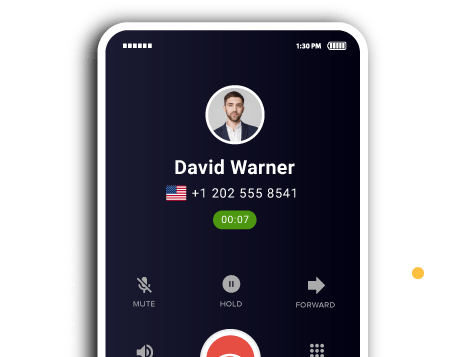
Choose a Plan Designed to Adapt,
Scale, and Perform at Every Growth Stage.
- 1 Unlimited calls with smart routing
- 2Add users in minutes, not days
- 3Built-in IVR, voicemail,& recordings
- 4Easily integrate with CRM
2) Ooma
Ooma is a cloud-based communication platform that allows businesses to receive and answer calls over the internet. There is no need for an on-premise PBX. The voice services that Ooma offers are also very reliable and come with straightforward pricing plans.
Ooma can also be a good option for businesses that operate remotely or follow a hybrid work setup. Security and reliability are built in, with redundancy and encryption to protect calls.
Key Features
- Virtual Receptionist
- Call Parking
- Call Blocking
- Call Queueing
- Extension Dialing
- Toll-free Numbers
- Video Conferencing
Pros
- Ooma offers cloud voice calling without the need to set up heavy tech infrastructure.
- Its multi-location support feature offers great flexibility to small businesses.
- Easy to set up, even for users who do not have tech expertise.
Cons
- Advanced features are limited. Businesses that require beyond basic calling features can face issues.
- Some of the Ooma plans might lack the mobile app functionality.
Pricing
- Essentials: $19.95 Per User/Per Month
- Pro: $24.95 Per User/Per Month
- Pro Plus: $29.95 Per User/Per Month
- Enterprise: (Contact For More Details)
*pricing as on 29/12/25
3) Grasshopper
Grasshopper is a virtual assistant for small businesses. It offers one of the best phone plans to keep things organized. It adds a professional business number to your personal phone. This way, you can easily separate work and personal calls.
Grasshopper provides toll-free, vanity, and local numbers for different needs. The best part? To get started, you need no extra gadgets. All you need is a phone and a reliable internet connection.
Key Features
- Multi-extension Systems
- Call Forwarding
- Business Text Messaging
- Custom Greetings
- Simultaneous Call Handling
- Virtual Phone Numbers
- Voicemail Transcription
- Porting an Existing Number
Pros
- Grasshopper is simple to configure and provides an easy-to-navigate interface.
- Budget-friendly pricing plan that suits small businesses.
- Adding numbers and users is comparatively easier than other platforms.
Cons
- Scaling can become a little tough for larger teams.
- Does not support multi-channel communication.
Pricing
- True Solo: $14/account
- Solo plus: $25/account
- Small Business: $55/account
*pricing as on 29/12/25
4) RingCentral
RingCentral is one of the best small business phone solutions. It offers an easy-to-use and feature-rich dashboard. Built for small businesses, it proves to be a budget-friendly and effective communication platform.
RingCentral ensures smooth connectivity. What standsout is its flexibility and user-friendliness. All in all, RingCentral has the perfect blend of affordability and comprehensive features that help businesses strengthen their communications.
Key Features
- Automatic Call Recording
- Voicemail-to-Email
- Business SMS
- Call Flip
- Background Noise Reduction
- Multi-level IVR
- Call Queues
- Real-time Analytics
Pros
- RingCentral provides a rich set of unified communication tools.
- Its integration capabilities with major business apps are strong.
- RingCentral’s scalability makes it a good choice for businesses of all sizes.
Cons
- Some advanced features are locked behind higher-tier plans.
- The interface may feel overwhelming for new users
Pricing
- Core: $20 per user/Month
- Advanced: $25 per user/Month
- Ultra: $35 per user/Month
- Customer engagement bundle: (Contact for More Details)
*pricing as on 29/12/25
5) Zoom Phone
Zoom Phone extends Zoom’s communication ecosystem. It goes beyond basic video meetings and provides full voice calling. Small businesses can use Zoom Phone from multiple devices. It can be a mobile device, a laptop, a desktop, etc. This ensures flawless connectivity across devices.
Its seamless integration with other Zoom platforms creates a unified experience for businesses that already use those platforms for their communications. Zoom Phone also leverages Zoom’s enhanced security frameworks, including encryption at rest and in transit.
Key Features
- Call Recording
- Voicemail Transcription
- Auto-attendant
- Zoom Video Meetings
- Call Routing
- Analytics Dashboard
- Desk Phone Support
- Call Forwarding
- Call Blocking
Pros
- Zoom Phone connects easily with the Zoom ecosystem.
- Message management can be improved with the help of voicemail transcriptions.
- Zoom’s widespread mobile network management can be a good option to expand the global reach.
Cons
- Zoom Phone lacks the advanced features that other platforms provide.
- Analytics are basic compared to dedicated VoIP systems.
Pricing
- Metered Plan: $10 per user per month
- US & Canada Unlimited: $15 per user/per month
- Global Select: $20 per user/per month
- Pro Plus: $21.99 per user/per month
- Business Plus: $26.99 per user/per month
6) Dialpad
Dialpad is created to help businesses build their communication from the ground up. It offers voice, video, and messaging in one unified interface. It suits well for teams that need intelligent voice calling features.
With Dialpad, calls can be easily routed based on rules, availability, etc. Its multi-location support keeps the global team connected and communication consistent. The platform’s AI insights help reduce training time and improve outcomes.
Key Features
- Call Forwarding
- Recurring Meetings & Conference Calls
- Voicemail-to-email
- IVR System
- Power Dialer
- Live Transcription
- Sentiment Analysis
Pros
- Dialpad features AI-powered call insights and transcription.
- It also supports voice, video, and messaging in one app.
- Dialpad’s seamless integration with CRM platforms helps teams boost productivity.
Cons
- Pricing tends to be relatively higher than basic VoIP plans.
- Call forwarding setup can be less intuitive.
Pricing
- Standard: $15 user/month
- Pro: $25 user/month
- Enterprise: (Contact for More Details)
*pricing as on 29/12/25
7) Google Voice
Google Voice is built around simplicity. It integrates easily with the Google Workspace. For businesses that already use G Suite, Google Voice can be an easy-to-manage option. Google Voice works on the web, mobile phones, and desktop apps.
Google Voice’s features like spam filtering and voicemail-to-text help teams manage calls more efficiently. Security defaults from Google Workspace protect calls and message data with enterprise-grade safeguards.
Key Features
- Call Forwarding
- Voicemail Transcription
- Google Workspace Integration (Gmail, Meet, Calendar)
- Spam Call Filtering
- Multi-device Support
- Call Screening
Pros
- Google Voice integrates tightly with the Google Workspace.
- It requires minimal setup for numbers and routing.
- An affordable option for small businesses for call management.
Cons
- Limited integration options and advanced features.
- It does not offer advanced analytics and limited international calling options.
Pricing
- Starter: $10/user/month
- Standard: $20/user/month
- Premier: $30/user/month
8) Nextiva
Nextiva is designed for SMBs searching for the best business phone service. It helps businesses streamline their operations. Nextiva also offers an advanced suite of features that help businesses enhance customer experience and productivity.
With Nextiva’s small business phone plan, SMBs can simplify their communication channels. This results in reduced app fatigue and improved efficiency. Also, Nextiva goes beyond being just a phone system. It offers a range of communication options, including phone calls, text, video, email, and instant messaging.
Key Features
- Auto Attendants
- Call Recording
- Call Monitoring
- AI Conversation Analysis
- Team Collaboration Tools
- Analytics & Reporting
- Unified Communication
- Team Chat
- Contact Management
Pros
- Nextiva offers built-in analytics, and dashboards help teams optimize performance.
- Integrations with CRMs and productivity apps are strong.
- Nextiva offers a unified communication platform to support high-volume calls.
Cons
- The feature set may be overwhelming for small teams.
- Implementation can require IT support due to complexity.
Pricing
- Core: $15 /user/month
- Engage: $25 /user/month
- Power Suite: $75 /user/month (Up to 100 Agents)
*pricing as on 29/12/25
Choosing the Right Phone System for Your Business Type
It is crucial to get an understanding of the platforms, but what is equally crucial is narrowing down which one suits your requirements. Here are a few factors that can help you choose the right phone system for your business.
1) Where Do You Make Calls and How Many?
Gain an understanding of the calling patterns of your business. Do you make calls locally, nationwide, or globally? Clarity on this aspect will help you determine whether you need the feature of international calling or not. Also, you will know exactly what charges you will have to pay. Along with where you call, you must also get clarity on what type of calls you make, whether your business makes outbound calls or inbound calls.
2) What Features Matter Most for Your Workflow?
Once you decide where you make calls and the call types. The next aspect to evaluate is the features. You can listdown the features you need. Growing teams can benefit from features such as:
- Call Forwarding
- Call Recording
- Call Analytics
- Predictive Dialer
- Power Dialer
- Auto Attendant
- Call Analytics
Choose a phone system that offers all these features and more. This way, you can make your small business more efficient and future-ready as well.
3) What Is Your Budget for a Phone System?
Budget is the most crucial factor for small businesses. They might not be able to invest in a phone system that demands a heavy upfront investment. Small businesses need to ensure that the system balances cost and their requirements equally. They cannot go for a system that has the needed features but is too costly, or a system that is budget-friendly but does not fulfill the requirements.
4) Which Integrations Do You Need With Your Phone System?
Select a phone system that integrates easily with your existing phone system or other third-party tools. Decide what tools you want the system to integrate with.
- Does your business require CRM integration?
- Does it require the system to connect with helpdesks?
- Does it require integration with market tools?
Finding the answer to “which integrations do you require?” will help you narrow down the best phone system.
5) How Easily Can the Phone System Scale as Your Business Grows?
Small businesses must select a system that makes them future-ready. The system must grow as the business grows. It should be easy to add users, locations, numbers, etc., to adapt to the increasing demand. All this should just take minutes, not days or weeks. A cloud phone system can help businesses scale without the need for heavy hardware setup. A scalable phone system ensures the communications never become complex.
Common Problems with Small Business Phone Plans
A phone plan may seem to be sufficient for small businesses at first. But there might be a lot of hidden limitations that impact customer experience as well as business efficiency.
1) Poor Call Quality or Dropped Calls
Customer trust that took you ages to build gets shattered because of poor call quality and call drops. Imagine a call getting dropped or audio getting delayed in the middle of an important conversation. It may cause your business a lot of damage. This is not just frustrating for customers, but it holds back your agents as well. They are not able to deliver to their full potential. This usually happens when your provider offers an unreliable network or uses outdated tech.
Quick tip
Partner with a provider that has a reliable VoIP phone system. This way, the call quality and call management issues won’t be a problem anymore.
2) Missed Calls Due to Basic Routing Features
Call routing is a routine process for businesses that rely a lot on communication. If the routing fails, there are chances that your customers’ calls might end up getting missed without you knowing it. Long waits don’t just make customers frustrated but also make them feel that your business does not care much. In the long term, all these missed calls can put a serious dent in your business’s revenue.
3) No Support for Remote or Hybrid Teams
Traditional phone lines are built around office-based teams, however they might not be tailored to support remote or hybrid teams. Remote agents might struggle to access calls due to inconsistencies in call handling across regions. Without a centralized dashboard, the risk for communication failure increases. Managers lack visibility into their team’s performance. Modern systems need to be cloud-based. This way, any agent located anywhere can work efficiently.
4) Limited Features in Entry-level Plans
Small businesses may not be able to afford the higher-tier pricing plans. And entry-level plans may cause them an issue with a lack of features. Advanced analytics, multi-level IVR, etc., might not be available in some basic phone plans. This reduces efficiency and can also keep the teams in the dark, as they might not be able to gain insights into performance. The growth hinders, and costs increase unexpectedly. A feature-rich plan helps businesses operate professionally from the beginning.
5) Phone Plan Doesn’t Scale as the Business Grows
Growth exposes phone system limitations quickly. Adding users becomes complicated and costly. New locations require separate setups. Scaling demands new hardware or contracts. A scalable phone system allows instant user additions. Businesses need flexibility to grow without communication disruptions.
Enhance Your Business with CallHippo – The Smart Phone Solution for Small Businesses
Clarity and reliability are must-have factors when running a small business. CallHippo offers both. It also offers speed, which is an added benefit for small businesses to stay productive and profitable. From business phone numbers to offer service globally to seamless integrations to enhance efficiency, CallHippo is a platform that can help you scale effortlessly.
With CallHippo, teams can manage calls from anywhere and never miss important customer conversations. Its simple setup, transparent pricing, and feature-rich plans make advanced business calling accessible without complexity. If you are looking for a phone solution that grows with your business and keeps communication seamless, CallHippo delivers the flexibility, control, and professionalism modern teams need.
System Built for Speed, Scale,& Sales
With the CallHippo AI-powered solution.
- 48% Increase in revenue
- 4x Increase in conversions
- 34% Cost savings
Try for Free  –
–
FAQs
1) What is the best phone plan for small businesses?
There is no one-size-fits-all answer for this. The best phone plan for small businesses can vary based on the requirements of each business. However, providers like CallHippo, Nextiva, and Dialpad offer value for money. They offer the complete mix of basic, advanced, and AI features that businesses need at an affordable price.
2) What is the cheapest way to have a business phone?
The cheapest option to have a business phone is to use a VoIP service. Providers like Google Voice, Zoom Phone, and CallHippo offer low-cost business calling.
3) How much should you expect to pay for a small business phone plan?
Most of the small business phone plans range between $10 to $30 per user pricing. However, if businesses require extra features, access for multiple users, or international calling needs, some providers might charge extra. This could increase the overall cost to over $30.
4) What features should I look for in a small business phone plan?
Crucial features such as unlimited text and calling, call forwarding, call routing, etc., are non-negotiable features. Apart from these basic ones, businesses can also look for features such as advanced analytics, multi-device support, and CRM integrations. Having the right phone service and the right mix of features creates tremendous results for small businesses.
5) Which phone system is best for startups or very small teams?
A simple, cloud-based system with great features can help startups or small teams the most. Providers such as CallHippo, Grasshopper, and Nextiva can be a good fit for startups and small teams. They can also make businesses future-proof, as it makes scaling easy for them.
Explore this content with AI:
Published : December 29, 2025
Harsh Bairagi is a B2B SaaS content writer with over 4 years of experience in the tech industry. Harsh believes in creating good copies to bridge the gap between tech and emotion. When not chasing clean copy or clever metaphors, he is busy catching up on his favorite sports.

Let’s Stay in Touch
Subscribe to our newsletter & never miss our latest news and promotions.
 +24K people have already subscribed
Source