
 Updated : January 29, 2026
Get an AI-powered summary for this content:
The way businesses manage customer conversations has changed dramatically over the last few years.
According to a survey, 33% of customers get frustrated because of waiting on hold. This highlights that they want quick answers and clear guidance.
This shift is exactly why Intelligent Virtual Assistants are becoming a central part of business communication.
IVA combines AI with voice-based technology and makes communication simpler for both businesses and their customers.
This guide explains,
- What is an IVA?
- How does IVA work?
- How does IVA differ from chatbots?
- How to implement IVA?
- Use cases of IVA?
Let’s begin.
What is an Intelligent Virtual Assistant (IVA)?
An Intelligent Virtual Assistant is an AI-driven system that automates customer interactions using natural language processing. It can,
- Understand customers’ voice commands.
- Decide what action is needed.
- Respond in a relevant way.
Unlike traditional IVR systems or rule-based bots, an IVA adapts to different situations, offering support in a human-like manner. The real strength of an IVA lies in understanding the context and customer sentiment. It remembers prior interactions. It understands customers’ intent instead of keywords, and connects users to the right outcome.

Pro-Tip
Before using an IVA at a full-scale, solve common queries first. This allows the IVA to deliver value quickly while learning from real conversations.
How Does CallHippo’s Intelligent Virtual Assistant Work?
At the core of an IVA is artificial intelligence working quietly in the background. CallHippo’s IVA, also referred to as “AI Voice Agent”, works by automating customer conversations from the very first interaction. Here is how you can set up CallHippo’s IVA with just a few clicks.
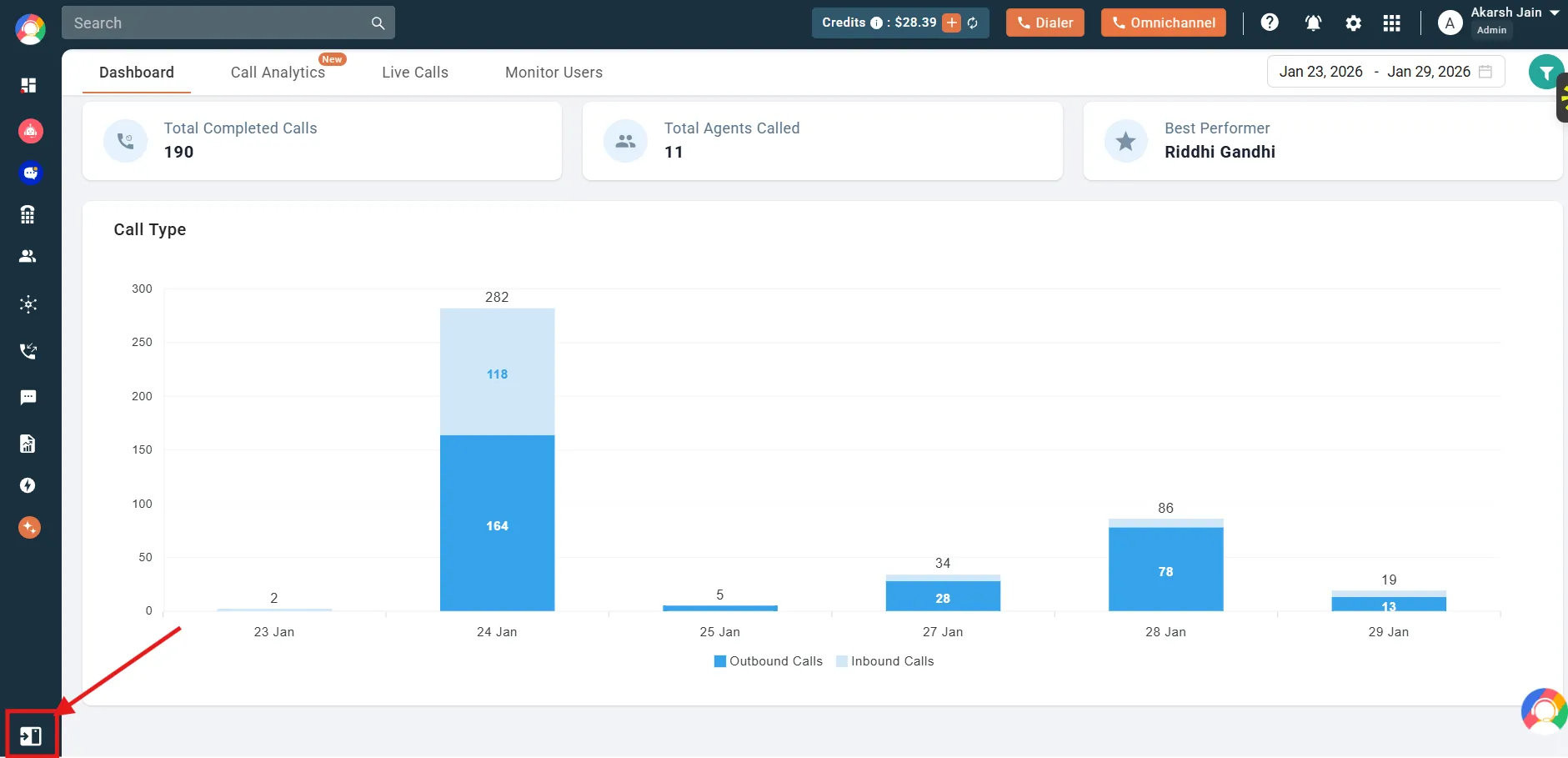
1. Login to the dashboard and click on the “Expand” icon
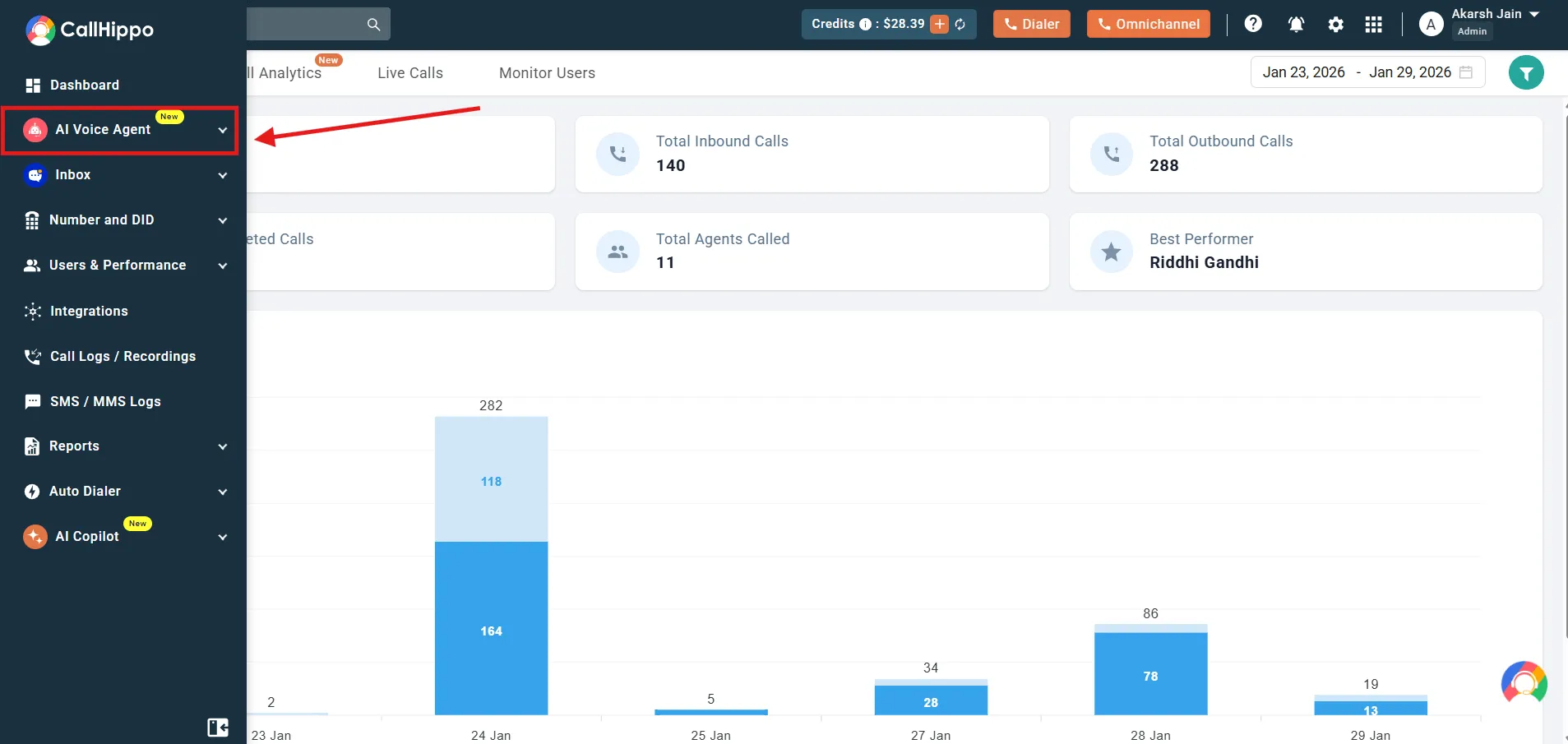
2. Then, navigate to the “AI Voice Agent”.
3. You will see “Create AI Voice Agent” in the top right corner of the dashboard.
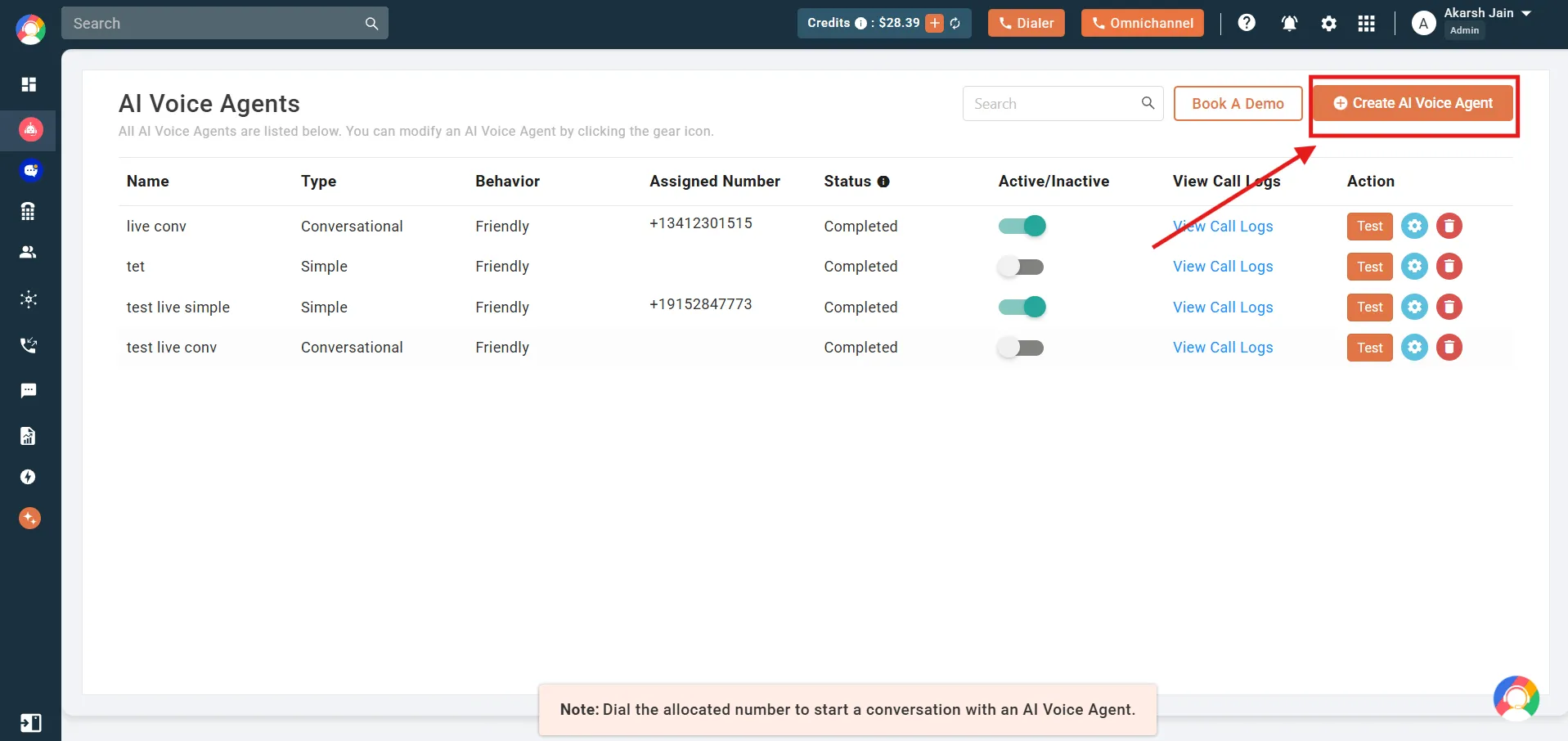
4. Start configuring by adding a “Name” and then select the “Agent Type”.
(Note: You can create a “Simple Agent” as well as a “Conversational Flow Agent”.)
5. Once you have configured, activate your AI Voice Agent.
6. Test the AI Voice Agent.
7. The final step is to confirm the AI Voice Agent setup.
While testing, you can start a conversation and end it to check the call quality and the flow. Also, you can view call logs to see the calls made and received. The above mentioned steps ensure you successfully create and activate your CallHippo IVA system.
Intelligent Virtual Assistant vs Chatbot: The Difference
Many people use the terms IVA and chatbot interchangeably. I always clarify this early because the difference matters. While both automate conversations, their capabilities and impact are very different.
1. Difference in Engaging with Customers
Chatbots usually follow predefined scripts. They work well for simple questions but break when conversations become complex. IVAs engage in a more natural way. They allow users to speak freely and guide the conversation intelligently.
From what I have seen, customers stay longer with IVAs because the user interaction feels less robotic. They are not forced to choose from limited options. Instead, they express needs in their own words.
Interesting Fact
Businesses using conversational AI see higher customer engagement rates compared to rule-based bots. This happens because customers feel understood rather than processed.
2. Difference in Offering Solutions to Customers
Chatbots often stop at answering questions. IVAs go further by completing tasks. They can reset passwords, schedule meetings, process requests, or route calls with full context.
I often explain it this way. A chatbot tells you where to go. An IVA takes you there. This difference positively impacts customer satisfaction.
3. Difference in Learning and Adapting
Chatbots usually need manual updates. IVAs learn continuously from interactions. They improve intent recognition, response accuracy, and decision-making over time.
This learning ability is what makes IVAs scalable. As call volumes grow, the IVA gets smarter instead of overwhelmed. In my experience, this adaptability is critical for fast-growing teams.
Expert Insight
AI systems trained on real conversations outperform static systems within weeks of deployment.
How to Implement an Intelligent Virtual Assistant in Your Daily Operations?
Implementing an IVA does not have to be complex. I always recommend starting with clear goals. Here’s the most effective way that you can follow to implement IVA in your daily operations.
Step 1: Set Clear Business Objectives: First, define why you need an IVA. Evaluate where customers face delays or confusion. Clear goals make sure the IVA solves real problems.
Step 2: Map Common Queries and Workflows: List down the simple tasks/routine inquiries and how conversations usually progress. This will help you set a clear flow for IVA. This also ensures accurate and relevant responses.
Step 3: Integrate With Existing Systems: Connect the IVA with existing systems. This allows customer data to flow across conversations. This way, agents get full context.
Step 4: Set Responses and Escalation Rules: Decide how the IVA should respond in different situations. Configure automated replies and escalation paths to live agents.
Step 5: Monitor Performance Regularly: Track how the IVA performs. Tracking regularly helps you identify what’s working and what needs improvement.
Step 6: Optimize and Improve Continuously: An IVA should evolve with your business. Continuous optimization keeps the IVA effective and aligned with customer expectations.
Intelligent Virtual Assistant Use Cases
There is no second-guessing that IVA is useful for businesses. But its use case differs from business to business. Here are a few use cases of an intelligent virtual assistant.
1. Customer Support & Contact Centers
The pain points are the same for all customer service teams: They face high call volume with a lot of repetitive questions. If agents have to repeat the same answers, it drains their time and energy. This is where an IVA provides real impact.
An intelligent virtual agent resolves common customer requests and basic troubleshooting. For example, callers asking “Where is my order?” or “What is my ticket status?” can be handled automatically. This reduces hold time and call transfer loops and improves agent focus.
The 80/20 Rule:
- Many call centers aim to answer 80% of calls within 20 seconds. If businesses provide customer service following this rule, they can easily improve their service.
2. Sales & Lead Qualification
In sales, first impressions matter. But manual lead qualification is slow and inconsistent. An IVA can transform the early steps of the sales cycle before a human support agent even joins the call.
When a prospect calls, the IVA can ask qualifying questions. It captures responses and routes hot leads directly to sales reps with full context. This ensures sales teams only engage with leads that fit key criteria.
3. Healthcare & Medical Offices
Healthcare providers manage countless patient calls every day. From appointment bookings to lab test queries to prescription refills, administrative staff often spend more time on routine calls than on patient care.
An IVA can handle these Healthcare calls automatically. Patients can,
- Ask about available appointment slots
- Request prescription refills
- Hear pre-recorded instructions for tests
Complex queries or urgent calls can be escalated to human agents with a summary of the conversation. This frees staff to focus on patient care without losing accessibility.
4. E-Commerce & Retail
Ecommerce businesses face unpredictable peak call times. Manual handling during these spikes becomes costly and inefficient.
IVAs help by addressing common customer inquiries like,
- Where is my package?
- How do I return an item?
- Can I change my order?
They provide instant answers or route complex requests to the right teams with the caller context. I’ve seen retail teams decrease support load significantly during sales peaks by relying on IVA automation in retail.
DID YOU KNOW?
- When IVAs handle order updates and tracking queries, human agents can focus on upselling or post-purchase retention conversations.
5. Travel & Hospitality
Travelers more often than not call with urgent questions like,
- Flight timings
- Cancellations
- Itinerary changes
These calls are time-sensitive. Therefore, delays or poor routing can lead to frustration. In worst-case scenarios, it can lead to customer churn as well. An IVA can handle real-time information. And if a human agent is needed, the IVA can send contextual data to the rep that increase the productivity of human agents.
How CallHippo’s AI-Powered Intelligent Virtual Assistant Can Help
CallHippo’s AI-powered Intelligent Virtual Assistant is built for real-time business conversations. It uses natural language understanding to handle calls intelligently. This ensures customers get fast and accurate responses without friction. It can even integrate seamlessly with other systems to help businesses offer personalized support.
Once CallHippo’s IVA understands context, it can answer calls, resolve complex tasks, or route them to the right agent. This reduces call transfers and improves first contact resolution. For growing teams, CallHippo’s AI virtual assistant scales easily. It supports high call volumes while learning continuously. In my view, this makes it a practical solution for businesses that want smarter automation without losing the human touch.

Ready to Manage Customer Conversations with IVA?
bottom circle
FAQ
1. Are IVAs and chatbots the same?
No, IVAs and chatbots are different. IVAs are smarter, AI-powered assistants that understand customer context. They can manage complex queries. While, chatbots follow pre-recorded responses.
2. What is the role of intelligent virtual assistants in collaboration?
IVAs assist teams in sharing information. It schedules tasks and automates workflows to make collaboration faster and more efficient.
3. What is the difference between an AI agent and an IVR?
AI agents can process natural language and offer personalized responses, while an IVR follows a menu and scripts.
4. Can I use AI as a virtual assistant?
Yes, AI can act as a virtual assistant to answer queries, route calls, and manage tasks automatically.
5. How does IVA reduce contact center workload and costs?
IVAs handle routine queries and self-service tasks, freeing human agents for complex issues, reducing response times and operational costs.
6. Can IVA impact customer experience?
Absolutely. By offering quick and consistent support, IVAs improve satisfaction and overall experience.
Published : January 29, 2026
Harsh Bairagi is a B2B SaaS content writer with over 4 years of experience in the tech industry. Harsh believes in creating good copies to bridge the gap between tech and emotion. When not chasing clean copy or clever metaphors, he is busy catching up on his favorite sports.

Let’s Stay in Touch
Subscribe to our newsletter & never miss our latest news and promotions.
 24k+ people have already subscribed
Source