

 Updated : January 21, 2026
Explore this content with AI:
Chinese phone numbers may seem confusing at first. Mobile or landline? Area code or prefix? Country code or local format? China has more than 1.8 billion mobile connections, and even a small mistake you make in dialing, the call just won’t connect.
With this blog, I’ll help you understand the Chinese phone number format, both for mobile and landlines. Plus, how to dial a Chinese phone number, tips to follow, and what to be careful about.
What is the Standard Chinese Phone Number Format?
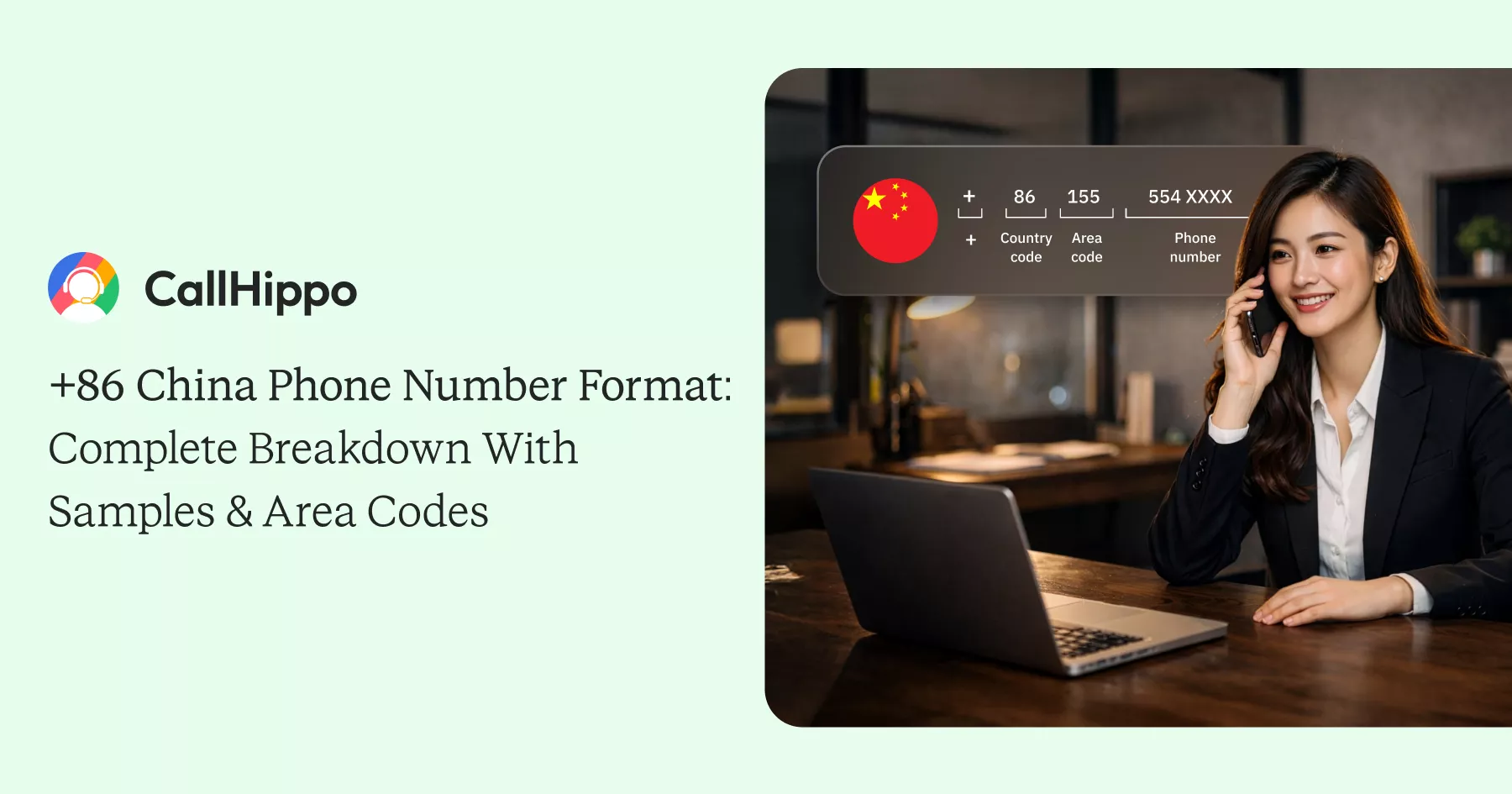
A Chinese phone number follows a clear and predictable format. You can follow this format to call a customer, set up a business account, or verify the contact. Let me break it down step by step:
1. China Country Code (+86) Explained
When you are dialing a number internationally, every Chinese phone number starts with the country code +86. This is China’s global identity for international calls.
Means if you are calling China from another country, you must add +86 before the number. However, if you are calling within China, then no need to enter the country code. You can just dial the number directly.
2. Length of Chinese Phone Numbers
Chinese phone number format has a fixed length. So you can easily recognize it once you know what to expect. This is because:
- Mobile phone numbers are 11 digits long, and
- Landline numbers usually have 10 to 12 digits, depending on the area code.
The total number length for landline numbers can change slightly because some cities follow a two-digit area code, while some have three-digits. Still, the structure remains consistent.
3. China Phone Number Example (Mobile & Landline)
So it’s clear now that mobile and landline numbers have a different China phone number format. Let us now look at simple China phone number examples to make this clearer:
A. Chinese Phone Number Example (Mobile):
Every mobile number is 11 digits long.
Example: +86 138 1234 5678
Here,
- +86 is the country code
- 138 is the mobile prefix (The three-digit mobile prefixes. These prefixes tell you about which telecom operator issued the number.
- Then comes the subscriber number (typically it is of 8 digits)

Make Calls to China without any Hassle!
CallHippo helps you dial Chinese phone numbers correctly and manage calls from one dashboard.
bottom circle
B. Chinese Phone Number Example (Landline):
As compared to mobile phones, Chinese landline numbers follow a slightly different structure. They are tied to specific cities and regions.
Example: +86 21 6789 4321
In this case,
- The area code comes first after the country code.
- After that comes the local subscriber number.
DID YOU KNOW?
China uses both two-digit and three-digit area codes. The difference depends on the size and importance of the city.
- Two-digit area codes are used by major cities like Beijing, Shanghai, and Guangzhou.
- Three-digit area codes are used by smaller cities and regions.
China Phone Number Area Codes
If you are calling a landline in China, the area code tells you exactly which city the number belongs to.
| City | Area Code |
|---|---|
| Beijing | 10 |
| Shanghai | 21 |
| Guangzhou | 20 |
| Shenzhen | 755 |
| Hangzhou | 571 |
| Chengdu | 28 |
| Wuhan | 27 |
| Xi’an | 29 |
| Nanjing | 25 |
| Tianjin | 22 |
These codes are always used for landline numbers. When you call from outside China, remember to add the +86 country code before the area code.

Get a Chinese Virtual Phone Number at Lowest Rate!
See China Calling Rates China Call Charges start as low as $1.350/Minute!
How to Dial a Chinese Phone Number? (Domestic & International)
There are different methods to follow when you dial a Chinese phone number within and abroad. Let’s look at the ways in detail:
1. Calling China from Abroad
When you call China from abroad, you need to follow these steps:
- Step 1:Dial your country’s international exit code (or international access code, e.g., 00 in India, 011 in the US).
- Step 2: Now, enter the country code for China, which is 86.
- Step 3: For mobile numbers, dial the full 11-digit number (starting with 1).
Example: +86 138-1234-5678
- Step 4:For landline numbers, drop the leading 0 from the area code.
Example: To call Beijing landline 010-87654321, dial +86 10-87654321.
2. Calling within China
There can be two scenarios when you make a call within China:
- Mobile numbers: Dial the full 11-digit number directly (no prefixes needed).
Example: 138-1234-5678
If calling within the same area code, just dial the local number.
If calling outside the area code, dial 0 + area code + local number.
Example: From Shanghai to Beijing: 010-87654321.
3. Calling Chinese Numbers from VoIP or Virtual Number Apps
Traditional carriers is thing of the past now. For businesses, the best option for calling Chinese numbers is through VoIP services or virtual number apps like CallHippo. It handles the dialing format for you. You don’t have to worry about adding the wrong code or missing a digit.
For businesses calling China frequently, VoIP and virtual numbers offer more control, better clarity and fewer failed calls compared to traditional phone lines.
Let CallHippo Handle,
Every Business Call for You.
- 1 Global Virtual Phone Numbers
- 2Smart Call Routing
- 3Call Forwarding
- 4Call Analytics and Reports
How to Get a Chinese Phone Number?
The process of getting a Chinese phone number is different for residents, travelers, and businesses. Some options are straightforward. Others come with restrictions you should know in advance.
Let us go through the most common ways.
1. Requirements for Foreigners
If you are a foreigner in Mainland China and want a local SIM card, you need to follow a few rules. Firstly, you should have a valid passport. In many cities, biometric verification is also required, where you need to have a photo and sometimes facial recognition also.
To purchase the sim, you need to buy it in person from an official carrier store. Due to government regulations, online purchases are rare.
2. Using eSIM for China
eSIMs are a popular option for travelers. To activate them is quite easy and does not require visiting stores for that. Most eSIMs work well for mobile data. However, there is an important limitation.
The problem is that many Chinese eSIM plans do not provide a real Chinese phone number. They are mainly designed for internet access. This means you may not receive calls or SMS on a Chinese number. Now this is a real issue if you need voice calling or verification codes.
So while eSIMs are convenient, they are not ideal for business communication.
3. Getting a Chinese Phone Number Online
Virtual phone numbers are a practical alternative. CallHippo is a virtual phone number platform where you can get virtual numbers for business use. You can make calls, receive them, route them to teams and manage all the things from one dashboard itself.
Simply follow these steps to get a Chinese virtual phone number:
- Step 1: Sign Up on CallHippo
Create an account on CallHippo website using your email.
- Step 2: Go to the “Add Number” section
After logging in, find the add a number from your dashboard. Here, you have to choose your country and the number type.
- Step 3: Select China as your country.
There, from the country list, choose China (+86)
Then pick the type of number that you want. The options you get are – local phone number, Chinese toll-free number, and a virtual mobile number.
- Step 5: Configure call settings
Now set up how you want calls to be handled. You can enable call forwarding, routing, and more – all from the same dashboard.
That’s it. The setup is done and your China virtual phone number is ready to use.
Cultural Nuances in Chinese Phone Numbers
Culture is a big part of how phone numbers are understood in China. What looks like a simple digit to you can carry a strong meaning for someone else especially when building business relationships with other countries.
1. Lucky numbers (8, 6)
The number 8 is considered very lucky in China because it sounds like the word for wealth and prosperity. Even 6 is positive as it represents smooth progress and success. Numbers with repeated 8s or 6s are seen as favorable for both business and personal use.
2. Unlucky numbers (4)
The number 4 is considered unlucky because it sounds similar to the word for death in Mandarin. Many people avoid numbers that have 4 in them. You may see buildings skip the fourth floor or phone numbers with 4 priced lower. This belief is still strong, especially among older generations.
Lucky phone numbers are seen as a symbol of success and good fortune. That’s why numbers with repeated 8s or balanced patterns are sold at a premium. Some companies even treat lucky numbers as long-term investments or brand assets.
Practical Tips for Handling Chinese Phone Numbers
If you deal with Chinese phone numbers often, let me tell you – small details matter a lot. A small formatting mistake and your call won’t connect. Or worst, you can land in unwanted legal trouble. Save these tips whenever you call:
1. Formatting Rules for Writing
When you share numbers, always write them in the international format.
Start with +86 and then the full number. Don’t remove the digits or change the spacing because this can confuse both people and systems.
For mobile numbers, keep all 11 digits together after the country code. And for landlines, make sure that you have clearly separated the area code from the local number.
2. Avoiding Spam and Scam Calls
Do not return missed calls from unfamiliar numbers and never share OTPs or personal details on the phone.
This is where CallHippo helps. With call logs and number tracking, you can spot unusual calling patterns early and act before things escalate.
3. Choosing the Right Operator for Travelers
If you are travelling to China and need a local connection, choose your option based on usage. Physical SIM cards are good if you are staying for a long time, but they require in-person verification. eSIMs are convenient for short trips, but it doesn’t support local calling or SMS.
For business or remote use, a virtual phone number is usually the best option to go for.
With a CallHippo virtual phone number, you can:
- Get a local Chinese phone number without a physical SIM
- Call and receive calls from anywhere
- View call logs and track activity easily
- Route calls to the right team in seconds
- Manage everything from one simple dashboard
How to Identify Spam, Scam, and Fraud Calls From Chinese Numbers?
Not every call from a Chinese number is suspicious. But scams do exist, and they often follow familiar patterns. You need to know how to really identify if a call is a scam and how to protect your business from it.
DID YOU KNOW?
- With over 1.12 billion mobile internet users phone numbers in China are deeply linked to banking, payments, and official services. This is why they are often targeted by scam calls.
1. Common Scam Patterns Associated With Chinese Numbers
You’ll see that many scam calls create urgency. They claim about bank issues, package delivery problems, or visa and tax invoices. Now these are sensitive conversations to have with someone over the phone. But there is a pattern. These calls use automated messages or poorly explained threats.
2. How to Tell if a Chinese Number Is Legit
If a number is legit, they will clearly explain who they are and why they are calling. They do not pressure you to act immediately. Plus, the channels they usually follow are official channels or email threads instead of demanding information on the spot.
Check if the number format looks correct. A valid Chinese mobile number is 11 digits and starts with 1. If you don’t feel it’s right, trust your instinct and pause before responding.
3. Tools to Check if a Chinese Phone Number Is Fake or VoIP
You can use caller ID apps, online lookup tools, or spam databases to check any fake or unfamiliar numbers. These tools show you whether a number has been reported before.
If you are a business and need an extra layer of safety, CallHippo helps here. With call logs, activity history, and number tracking, you can review calling patterns and spot unusual behavior early.
Conclusion
Chinese phone numbers may look complex at first, until you understand the structure. From mobile prefixes and area codes to cultural meanings and scam awareness, each detail helps you communicate more confidently.
If you are calling China for business or managing a team across borders, CallHippo is a platform designed for you. No dialing confusion. Just clearer calls, better control, and smoother conversations.
FAQs
1. Which country code is +86?
The +86 country code belongs to China. You need to add it when you call a Chinese number from outside the country. For calls made within China, the country code is not used.
2. How long is a Chinese phone number?
There are mainly two Chinese phone number formats.
- A Chinese mobile number is always 11 digits long.
- Landline numbers usually range between 10 and 12 digits, depending on the area code and city.
3. Do Chinese numbers start with 1?
Yes. All Chinese mobile numbers start with the digit 1. The digits that follow help identify the mobile operator and the subscriber.
4. Can foreigners buy a Chinese SIM card?
Definitely, they can, but there are some restrictions. They should buy a SIM card in person using their passport. Biometric verification is also common. For such uses, online purchases are rare because of the local regulations.
5. How to verify a Chinese phone number online?
If you use CallHippo, verification starts automatically through call logs and activity tracking. You can review call history, spot unusual patterns, and identify suspicious numbers early.
There are also caller ID apps. Spam reporting websites, or online number lookup tools that you can use. These services show whether a number has been reported or flagged by other users.
6. Can a Chinese number receive SMS verification codes?
Yes, most active Chinese numbers can receive SMS verification codes. However, there are some virtual or temporary numbers that may not support this. Always confirm SMS support before using a number for signups or account verification.
7. What to do if you receive a suspicious call from a Chinese number?
Do not return missed calls from unknown numbers. Don’t divulge personal information, bank account information, or OTPs. If you sense some kind or urgency or the person threatening, the best is to ignore and block the number. You can also use tools to confirm if the number is a legitimate one or not.
Published : January 16, 2026
Anant Berge is a B2B SaaS content writer who creates engaging, user-focused, and SEO-driven content for tech businesses. With a knack for simplifying complex ideas and a passion for storytelling, Anant crafts narratives that help brands connect with their audience through blogs and website content.

Let’s Stay in Touch
Subscribe to our newsletter & never miss our latest news and promotions.
 24k+ people have already subscribed
Source