
 Updated : December 23, 2025
Here’s the reality: bringing in a new customer costs five times more than keeping one does! But most companies, 44% according to Bain & Company, still spend more on acquisition than retention. Customer experience marketing changes this. It turns every support chat, product interaction, and billing question into signals that tell you when customers are about to leave. The payoff is that businesses doing this right see churn drop and customer lifetime value jumps. Let’s understand more about customer experience marketing and how to meet customer expectations.
What Is Customer Experience Marketing?
Customer experience marketing is built on how people feel about your brand. Traditional marketing treats the sale as the finish line, but customer experience marketing sees it as the beginning. The moment someone buys from you becomes day one of the relationship you’re working to build and strengthen.
The split is straightforward. Traditional marketing says, “Buy this.” Consumer experience marketing says, “We’ll make every interaction count.” One gets you a one-time buyer. The other gets you someone who stays.
How CX Integrates With Marketing?
Marketing CX removes the barrier between acquisition and retention. Your emails now check customer health scores before going out. Your content addresses real issues people face when they’re using your product. Your ads reflect actual usage behavior, not just browsing history.
When marketing and CX function as one unit, you’ll notice three shifts:
Promises match reality: Someone signs up based on your messaging and gets exactly that. According to Forrester research, 73% of customers say experience is the number one factor in their purchasing decisions.
Teams share data: Sales and support work from the same customer information. Conversations flow naturally, whether someone’s talking to marketing or support.
Retention drives growth: Happy customers bring others in without you having to ask. Studies from Nielsen show that 92% of consumers trust recommendations from people they know over any other form of advertising.
Why Customer Experience Matters in Marketing?
Research from Salesforce indicates that over 50% of consumers will switch to a competitor after a single unsatisfactory customer experience. For B2B buyers, that number jumps to around 80%.
Here’s what most miss: retention costs a fifth of what acquisition does. Yet marketing budgets still lean hard toward bringing new people in. Why customer experience matters shows up when you tally what losing a customer actually costs, but years of potential spending.
Why Customer Experience Marketing Matters for Retention and Revenue?
Benefits of Customer Experience Marketing
A solid customer experience marketing strategy hits your bottom line in ways you can measure.
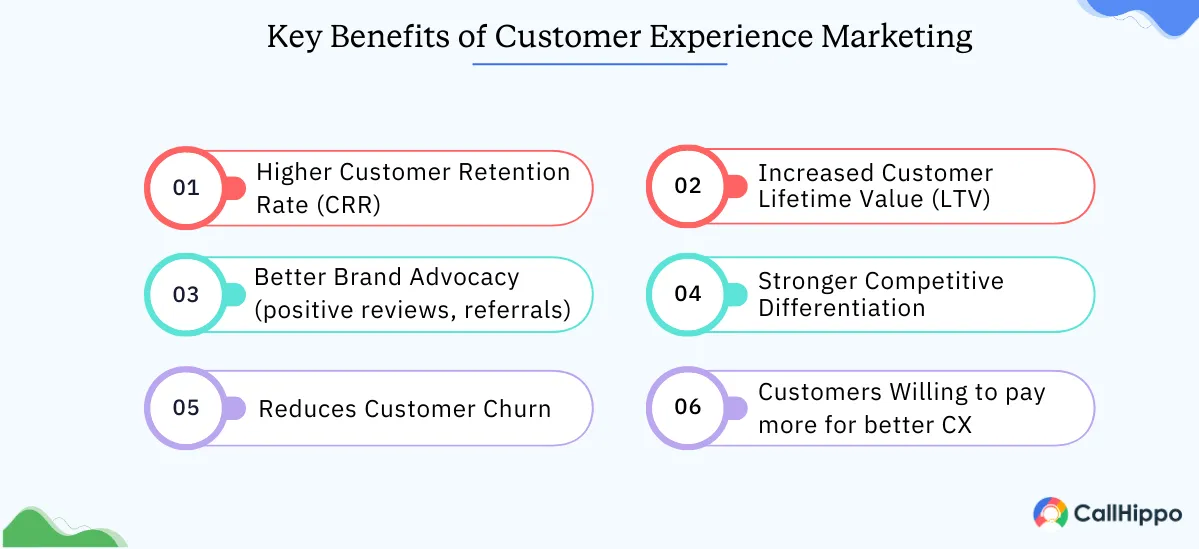
1. Higher Customer Retention Rate (CRR)
Customer retention rate tells you if your company has sustainable health or progress. Research from Bain & Company shows that when you improve customer experience in marketing by 5%, retention can climb as high as 95%. That builds on itself every quarter.
Real-world example: Slack’s a good case study. They focus on week one after signup. According to their public metrics, users who nail key actions in that first week are more likely to still be using Slack six months out. Marketing doesn’t end at signup for them; it starts there.
2. Increased Customer Lifetime Value (LTV)
People with good experiences spend 140% more than those with bad ones. They upgrade. They add users. They grab extra features without you leaning on upsell tactics.
Real-world example: Take Spotify. Their personalized playlists and year-end Wrapped campaigns turn casual users into superfans. According to industry analysts, Premium subscribers engaging with these features stick around three times longer. That’s not random; it’s CX marketing working.
3. Better Brand Advocacy (positive reviews, referrals)
Happy customers do your selling. Research shows companies with excellent CX generate 5x higher customer advocacy rates. These people drop five-star reviews, shout you out on social media, and send colleagues your way without any referral incentive.
Real-world example: Apple’s NPS sits north of 70 according to Satmetrix data because its CX builds emotional ties. People don’t just buy iPhones; they join the Apple world and bring friends along.
4. Stronger Competitive Differentiation
When products all look the same, experience separates you. Gartner research shows 86% of buyers pay more for better CX. Competitors can copy features fast. They can’t copy how you make people feel.
Real-world example: Zappos built a billion-dollar shoe business online by making returns simple. According to founder Tony Hsieh’s documented strategy, they’re not selling shoes; they’re selling certainty. That’s differentiation through experience.
5. Reduces Customer Churn
Churn reduces growth. A 2% monthly churn rate means 22% of customers will be gone in a year based on basic compound calculations. Marketing and CX working together spot who’s at risk before they bail.
Real-world example: Netflix monitors viewing patterns. According to their product team interviews, when engagement drops, personalized recommendations show up. When a payment bounces, a retry happens smoothly. These small moves cut both types of churn.
6. Customers Willing to pay more for better CX
Research shows people pay premiums for better experiences. This isn’t about jacking up prices randomly. It’s about delivering enough value that price takes a back seat.
Real-world example: Amazon Prime runs $139 a year. According to Consumer Intelligence Research Partners, millions pay happily because what they get, fast shipping, easy returns, streaming, justifies the cost. CX became a revenue stream.
Key Strategies for Implementing Customer Experience Marketing
These go past the standard advice you’ve already tried. They fix the actual friction that makes people leave.
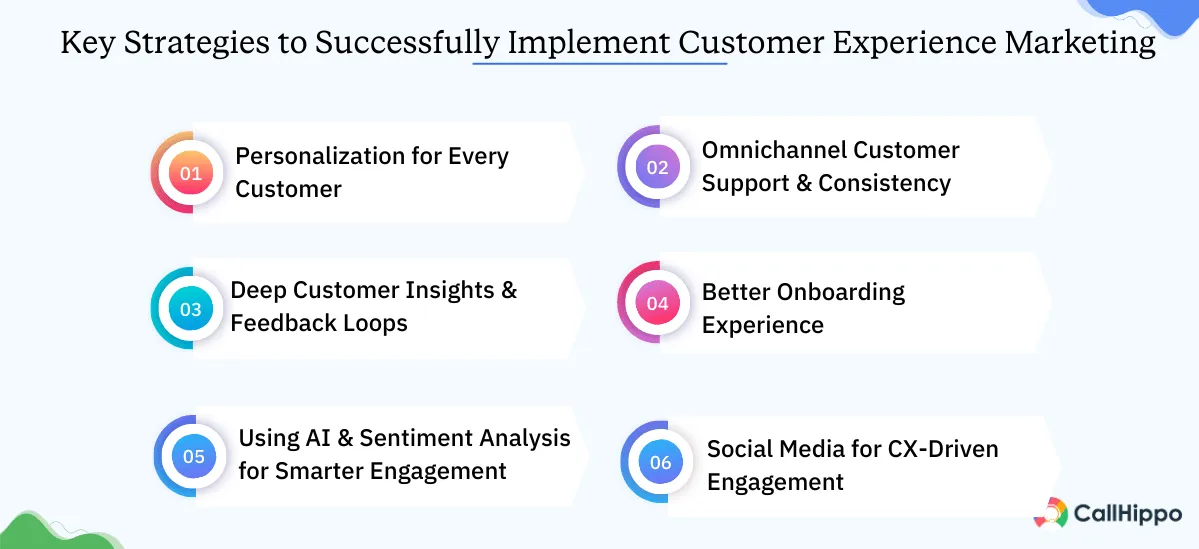
1. Personalization for Every Customer
Generic messages get skipped. Personalization based on what people do, how they use your product, and what they prefer in responses. Most companies stop at “Hi [First Name].” That’s not personalization, that’s basic.
Real personalization segments by usage, not age or location, and it helps gain a positive customer experience. Grammarly sends different emails to daily users vs. weekly ones. Daily users get advanced tips. Weekly users get habit-building nudges. Both engage more because the message fits where they are.
What Is Personalization in Customer Experience Marketing?
- Personalization in CX marketing means using behavioral data, purchase history, and usage patterns to customize every customer interaction, not just inserting names into email templates. This includes personalized product recommendations, customized onboarding flows, and behavior-triggered communications.
2. Omnichannel Customer Support & Consistency
People use various communication channels while they learn and understand products. They start on chat, move to email, and finish on the phone. If agents can’t see the whole picture, customers repeat everything. That frustration piles up until they’re done.
Real omnichannel means one data source. Every channel pulls from the same history. Agents see past conversations no matter where they happened, and this helps the customer, too. It increases brand loyalty and results in a superior customer experience.
3. Deep Customer Insights & Feedback Loops
Most feedback systems gather data nobody uses. Surveys pile up in folders. Tickets close without anyone looking at patterns. Research shows that while 80% of companies think they deliver superior customer service, only 8% of customers agree. That gap between collecting feedback and doing something about it kills retention.
Build tight loops. When people report issues, track fixes, and circle back. Mine support conversations for product gaps. Turn common questions into onboarding content that heads off confusion.
Key Components of an Effective Customer Feedback Loop
- Customer feedback loops should include systematic collection methods (NPS surveys, CSAT scores, support ticket analysis), AI-powered sentiment analysis, and closed-loop follow-up where customers see how their feedback drove changes.
4. Better Onboarding Experience
Traditional onboarding dumps every feature at once. Good onboarding gives quick wins.
Map the fastest path to value. Cut optional steps out of the critical flow. Get users to one real outcome before adding layers.
5. Using AI & Sentiment Analysis for Smarter Engagement
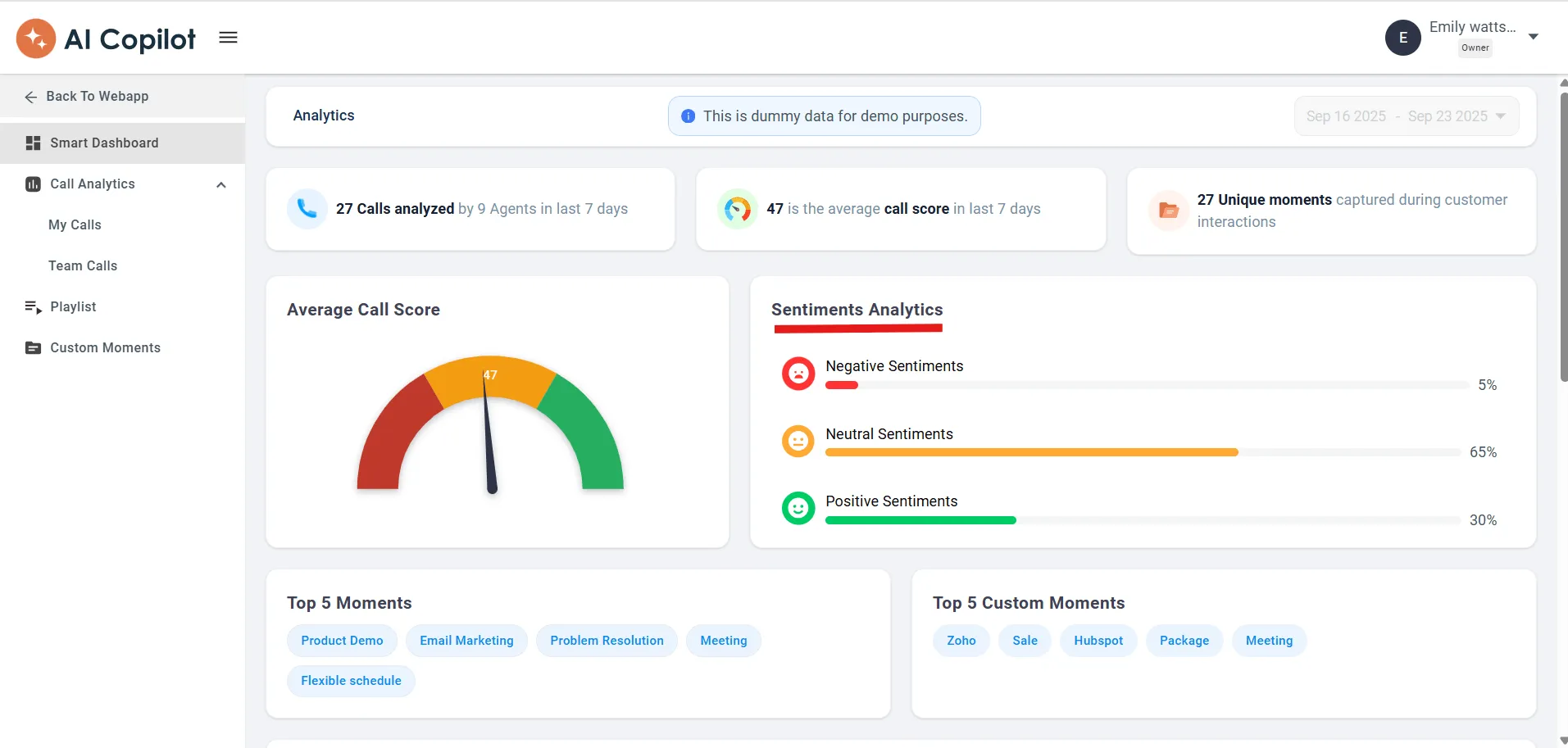
AI catches at-risk customers before they decide to leave. Sentiment analysis reads what’s not said in support chats. Research from Gartner predicts that by the end of 2025, 75% of customer service interactions will be powered by AI. These tools spot warnings people miss.
Watch for pattern changes. The power user goes quiet, reach out. Sentiment tanks in a support thread? Escalate now, don’t wait for the angry cancellation.
How Sentiment Analysis Helps You Predict Churn and Improve Customer Experience?
- AI and sentiment analysis in CX marketing use machine learning algorithms to analyze customer interactions across channels, predict churn risk based on behavior patterns, and trigger automated interventions or human outreach based on sentiment scores.
6. Social Media for CX-Driven Engagement
Social isn’t just brand building. It’s where people complain, ask questions, and decide whether to stay. How fast and how well you respond directly affects retention.
Public support on Twitter and Facebook shows everyone your approach. Quick, helpful responses become proof points. Ignored complaints become warnings prospects read while evaluating you.
What Today’s Customers Expect From Brands?
What people expect has moved. Research from Salesforce shows 66% of customers expect companies to understand their unique needs and expectations. What worked two years ago is baseline now.
1. Hyper-Personalized Experiences
Generic conversations are out. People expect you to remember preferences, predict needs, and customize everything. Research shows that 71% expect personalization, and 76% get annoyed when it’s missing.
This goes way past name tokens in emails. Netflix’s whole interface shifts based on what you watch, according to their recommendation system documentation. Amazon’s homepage is different for everyone. Spotify builds playlists that feel custom-made.
What Are Hyper-Personalized Customer Experiences?
- Hyper-personalized experiences use customer data, behavioral analytics, and AI to customize product recommendations, content, communications, and user interfaces for each customer based on their preferences, history, and predicted needs.
2. Seamless Cross-Channel Journeys
People don’t think in channels; they think in goals. They research on mobile, compare it on a laptop, and buy in a store. Research shows customers use multiple channels during their shopping journey. If the experience breaks between these, they notice right away.
Unify data. Let people start somewhere and finish anywhere. Make the handoff invisible. Channel should be their choice, not your limitation.
3. Instant Support and Faster Responses
Speed drives satisfaction. Research shows 90% call immediate response important for support questions. “Immediate” means 10 minutes max based on customer expectations studies.
You don’t need massive teams. Use AI for common questions, route complex stuff to specialists fast. Use async channels like chat instead of trapping people on hold.
4. Honest, Transparent Communication
People forgive mistakes. They don’t forgive you when you hide them. Something breaks, tell them fast. If you mess up, own it clearly. If there are timeline slips, update before they ask.
Real-world example: Buffer shows their product roadmap publicly, what’s coming and when, according to their transparent operations blog. They share revenue openly. That transparency builds trust that survives problems.
5. The Core Pillars of Modern CX
Three pillars hold up good CX based on extensive customer experience research: consistency, customization, and emotional connection.
1. Consistency Across the Journey
Every touchpoint should feel like the same company. Chatbot, email, calls, in-app messages, tone, info, and quality need to match. Audit the journey. Map every interaction. Find where things diverge. Standardize quality while keeping channel-specific flavor.
2. Customization That Feels Human
AI scales, humans empathize. The best experiences mix both. Automation runs routine things; humans handle complex emotional situations. Data shows customers expect companies to respond and interact with them in real time.
Don’t bury agents behind bots. When people need humans, make them available. When automation fixes things instantly, use it. Match the tool to the situation.
3. Emotional Connection With the Brand
Facts inform, emotions decide. Customers stay loyal to brands that make them feel good. Understand customer pain points. It is not about being overly friendly, but about understanding what matters to them and showing you care about their success.
Real-world example: Duolingo’s owl creates attachment through personality according to behavioral psychology studies of their app. Those reminder notifications feel fun, not pushy. People get attached to a language app because it feels like a friend, not software.

Hard to Keep Response Quality Consistent?
Give your team clear call insights and steady performance with CallHippo.
bottom circle
Key Metrics & KPIs for CX Marketing Success
Measuring CX means looking past surface metrics to things that actually predict retention.
1. Net Promoter Score (NPS)
NPS asks one thing: “How likely are you to recommend us?” Answers split people into promoters, passives, and detractors. Bain & Company research (creators of NPS) shows score indicates satisfaction and predicts growth.
Don’t just track NPS, though. You need to act on it. Call detractors to learn what went wrong. Ask promoters for referrals. Push passives to promoters by fixing their specific gripes.
Track by segment and journey stage. New customers score differently from long-timers. Figure out which experiences create promoters, which create detractors.
What Is Net Promoter Score (NPS) and How Does It Work?
- Net Promoter Score measures customer loyalty on a scale of 0-10, with promoters (9-10) likely to recommend your brand, passives (7-8) satisfied but unenthusiastic, and detractors (0-6) unhappy and potentially damaging to your brand through negative word-of-mouth.
2. Customer Satisfaction (CSAT)
CSAT gauges happiness with specific moments. After support chats, purchases, and feature use, ask “How satisfied were you?” This pinpoints what works, what doesn’t.
Use CSAT to find friction. Low scores on certain interactions reveal exactly where to fix things. High scores confirm what’s working, so you can repeat it.
3. Customer Retention Rate (CRR)
Retention rate is the percentage who stick around over time. According to Frederick Reichheld of Bain & Company, increasing retention rates by 5% increases profits by 25% to 95%. Run it monthly, quarterly, and yearly to catch trends.
Formula: Customer Retention Rate (CRR)
- ((Customers at End X New Customers) ÷ Customers at Start) × 100
Example calculation:
- You start January with 100 customers.
- You gain 20 new customers.
- You end the month with 110 customers.
- Retained customers = 110 ? 20 = 90
- Customer Retention Rate = (90 ÷ 100) × 100 = 90%
Segment by cohort, channel, tier, and usage. Different groups churn for different reasons. Blanket retention tactics miss these differences.
4. Conversion Rate from CX-Driven Campaigns
Campaigns built on CX data convert better. Track how experience-informed messaging performs vs. traditional acquisition messaging.
Watch email opens, clicks, and conversions for campaigns using customer health data. Stack against demographic campaigns. The gap shows experience-based marketing’s power based on extensive A/B testing research.
Supporting Technology & Platforms for CX Marketing
Tech enables scale. The right stack turns one-off interactions into repeatable excellence. Here is what will work in 2026 based on current market analysis.
1. Unified CXM & Cloud Telephony Platforms
Cloud telephony connects your whole communication setup. Instead of separate phone systems, email, and chat, unified platforms tie them together. Unified customer experience management platforms are essential for delivering consistent omnichannel experiences.
CallHippo delivers this foundation based on verified customer reviews and product capabilities. Their cloud phone system plugs into your CRM, giving agents full customer context on every call. Customer calls in, agent sees history, recent interactions, and current issues automatically.
Key CallHippo features validated by users:
- Smart call routing sends people to the right team member based on profile and issue type, cutting frustrating transfers
- IVR systems greet personally and route intelligently based on caller information
- Call tracking reveals which campaigns drive calls, so you know which ads, emails, and social posts generate conversations.
- Multi-channel support built in voice, SMS, and chat operates from one interface.
- Agents switch channels without losing context, while customers move between channels seamlessly.
For marketing teams specifically, CallHippo’s call attribution closes the loop between spend and actual customer contact according to product documentation and user testimonials.
Hard to Keep Response
Quality Consistent?
- Real-time monitoring
- Consistent responses
- AI Advanced Features
Try for Free  –
–
2. Conversational Analytics & Voice Intelligence Solutions
Understanding thousands of customer conversations used to need big analysis teams. Voice intelligence automates this. CallHippo AI voice agent transcribes calls, catches sentiment, and flags issues automatically based on natural language processing technology.
How it works in practice:
- The AI spots patterns across thousands of chats. If multiple customers mention the same problem, you know immediately based on automated alerts. Sentiment goes negative? Team leads get real-time notifications.
- These insights feed marketing directly according to CallHippo’s integration capabilities. Common questions become FAQ content. Frequent objections shape sales training. Product complaints inform roadmaps. Customer voice becomes hard data instead of anecdotes.
- Keyword tracking catches emerging trends through sentiment analysis. Customers suddenly asking about a competitor’s feature? The product team knows before it causes churn based on automated monitoring.
3. AI-Driven CX Automation & Smart Routing
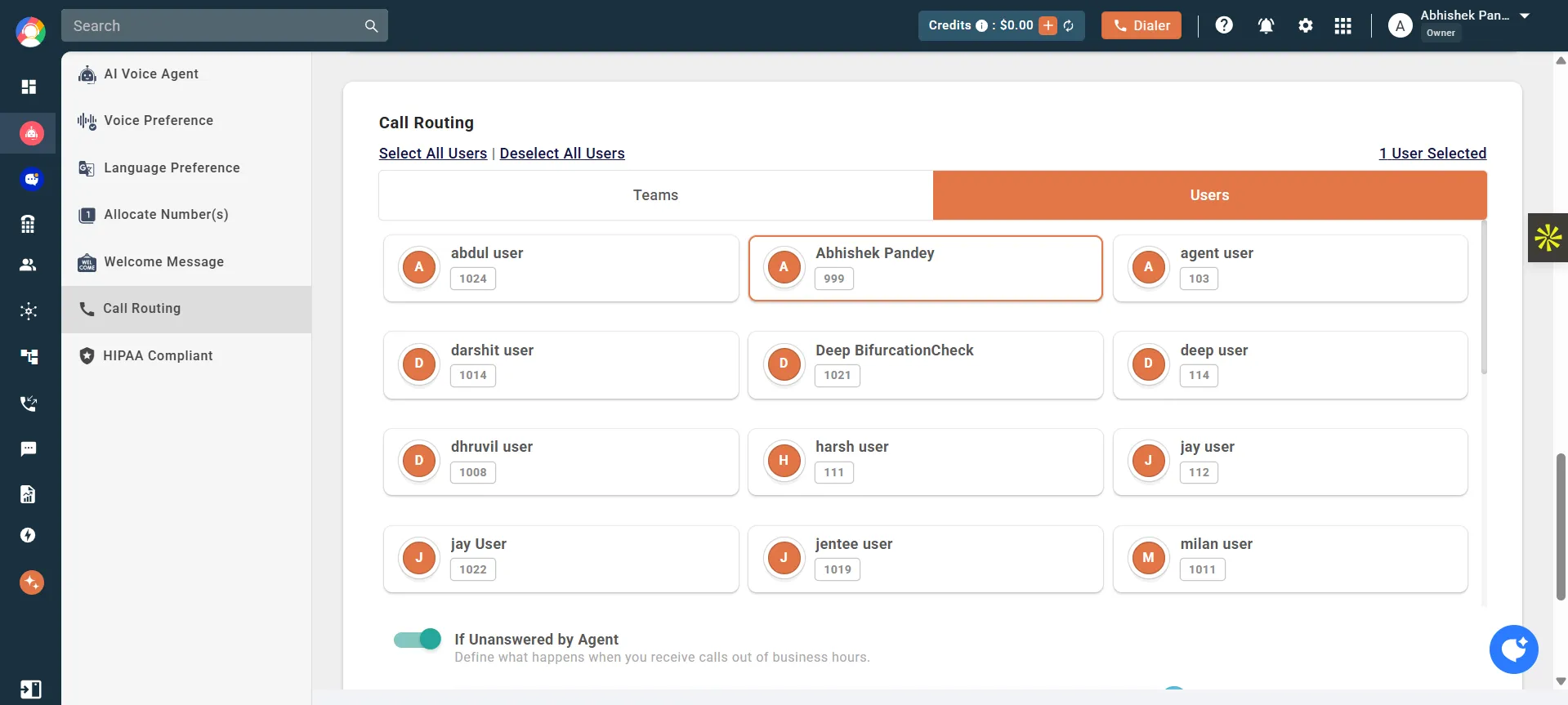
Not everyone needs human help immediately. AI tackles routine things instantly while routing complex issues to specialists. Speed and quality together are based on intelligent automation and also result in great customer service.
CallHippo’s smart routing considers customer value, issue complexity, agent expertise, and availability according to its routing algorithms. High-value customers with critical issues hit senior agents first. Simple questions go to AI or junior agents.
The system learns constantly through machine learning. If customers are frustrated with AI, it escalates to humans automatically. Certain issues always need people, and routing adjusts automatically based on patterns.
Automated callbacks kill hold times according to user feedback. Wait times spike? Customers get callback offers. They go about their day, keeping their spot in line.
4. Workforce Engagement & Real-Time Coaching Tools
Agent performance shapes customer experience directly. Real-time coaching improves agents mid-conversation, not after, based on proven training methodologies.
CallHippo’s live monitoring lets supervisors listen as calls happen according to product specifications. If agents struggle, supervisors can whisper guidance. Only the agent hears through whisper coaching technology. This stops bad experiences before they happen.
5. CRM, Helpdesk & Messaging Integrations Ecosystem
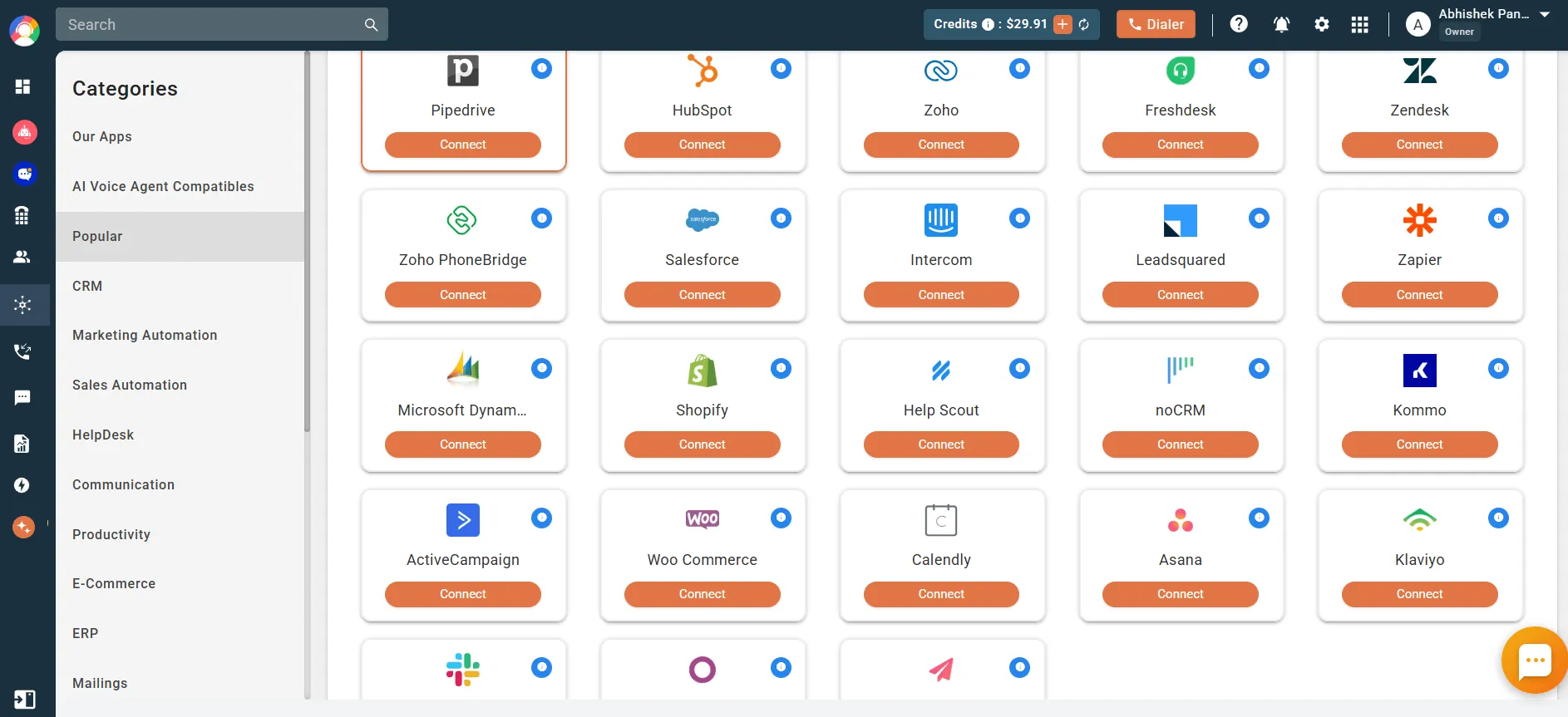
Disconnected tools create silos. Integration ecosystems unify customer data across everything based on modern API architecture.
CallHippo integrates with major CRMs (customer relationship management software) according to the integration marketplace: Salesforce, HubSpot, Zoho, and Pipedrive. Customer calls, their CRM record pops automatically. Call notes sync back immediately. No manual entry, guaranteed accuracy based on bi-directional sync.
Comprehensive integration capabilities:
- Helpdesk integrations (Zendesk, Freshdesk, Help Scout) connect tickets to calls
- Agents see open tickets during calls automatically
- One-click ticket creation from calls
- Resolution notes update both systems through automated syncing
- Messaging integrations (Slack, Teams, WhatsApp) bring alerts to existing workflows
- Customers reach support through preferred apps
The complete ecosystem means data flows everywhere automatically according to the integration documentation. Marketing sees call results from their marketing campaigns. Sales sees support history before follow-ups. Support sees the purchase history before troubleshooting. Everyone works from the same live data based on a unified data architecture.
How to Build A Customer Experience Marketing Strategy?
Moving from idea to execution takes a system. Here’s the framework based on proven methodologies from leading CX consultancies.
1. Map the Customer Journey And Identify Friction Points
Document every touchpoint from awareness through renewal based on the entire customer journey mapping. Include marketing touches, sales interactions, onboarding, support channels, product use, and billing.
For each point, ask:
- What do customers expect here?
- What actually happens?
- Where does reality miss expectations?
Those gaps are friction. Prioritize by frequency and impact based on impact analysis. Use interviews, ticket analysis, and session recordings to catch what friction dashboards miss. Build a visual journey map that your whole team sees, with friction marked clearly for alignment.
2. Personalize Messaging And Experiences For Each Audience Segment
Generic messaging fails because customers are not generic. You need to segment by behavior, not demographics.
Create personas from usage patterns:
- Power users want advanced features and exclusive access
- Casual users need habit-building motivation
- Dormant users need win-back campaigns, reminding them of the value
- At-risk users need immediate intervention before they bail
Your messaging should mirror their current relationship. Don’t send feature announcements to people who haven’t logged in for 60 days based on engagement data. Send reactivation offers.
Test everything through A/B testing methodology. Subject lines, timing, channels, and content. Small wins compound based on continuous optimization.
3. Deliver Consistent, Seamless Omnichannel Support
Customers don’t care about organizational charts. They want help regardless of the channel. Support should feel identical everywhere. This will lead to better customer advocacy.
Implementation steps:
- Set up shared inboxes where all communications land
- Email, chat, call, tweet: agents see full history through unified systems
- Set response standards per channel and hit them consistently
- If you promise a 1-hour chat response, deliver in 55 minutes every time based on SLA tracking
- Enable channel switching without info repetition through context preservation
Document common issues in a searchable knowledge base accessible everywhere according to self-service best practices.
4. Use AI Insights And CX Metrics To Optimize Continuously
CX isn’t a project; it’s continuous improvement based on Kaizen methodology.
- Check NPS, CSAT, retention, ticket volume, and call metrics. Catch trends before they explode through early warning systems.
- Use AI to spot patterns people miss. CallHippo’s analytics identify a correlation between interaction types and churn risk according to predictive modeling. Maybe customers calling about billing twice in 30 days have 5x higher churn. That insight triggers proactive outreach automatically.
- Iterate fast based on agile methodology. Spot friction, test fixes in days, not months. Weekly small improvements beat quarterly perfect solutions according to lean startup principles.
- Share insights across teams through regular syncs. Break silos through cross-functional reviews according to organizational design research.
- Build experimentation into culture. Not everything works based on innovation research. Learn fast, iterate, compound small wins.
Conclusion
Customer experience marketing is how you think about growth based on modern business strategy. Acquisition fills the bucket. Experience stops the leaks.
Companies winning invest equally in keeping and getting customers. Every interaction’s a retention chance. Success gets measured by lifetime value, not quarterly sales.
Start small. Improve systematically. Compound over time. Your retention six months out reflects today’s work.
Your action for today:
Audit one high-friction touchpoint. Pick something that hits lots of customers, not edge cases. Map expectation vs. reality. Fix the gap this week based on the quick wins methodology.
FAQ
1. How is Customer Experience Marketing different from traditional marketing?
Traditional marketing stops at the sale. CX marketing starts there. Traditional chases acquisition. CX focuses on retention. Traditional tracks campaign metrics. CX tracks lifetime value. Traditional sees transactions. CX sees compounding relationships based on relationship marketing theory. The core difference is timeline: traditional optimizes quarters, customer experience strategy optimizes in years.
2. What role does customer emotions play in CX marketing?
Research shows emotions drive loyalty harder than features or price. People remember how you made them feel based on emotional psychology. CX marketing engineers emotional moments. Fast responses create relief. Personal attention creates appreciation. Transparency creates trust based on behavioral science. These build into loyalty that survives problems and competitive offers.
3. Can AI improve customer experience marketing?
AI improves CX marketing in three ways: prediction, personalization, and scale. Predictive AI flags likely churners before they decide to leave through machine learning algorithms. Enables proactive moves. Personalization AI tailors interactions to behavior, preferences, and history using recommendation engines. Scale AI handles routine things instantly while routing complex issues to humans through intelligent automation. AI amplifies humans; it doesn’t replace them. The best strategies use AI for efficiency, humans for empathy.
4. Can small businesses implement CX marketing effectively?
Small businesses often execute CX better than big companies. Size creates agility. You respond faster, personalize deeper, and maintain consistency more easily than large competitors. The key is to choose the right tools. Cloud platforms like CallHippo provide enterprise features at small-business prices. Focus on the highest-impact touchpoints first. Perfect onboarding before building automation. Make support exceptional before adding channels based on prioritization frameworks. Small budgets force prioritization, which often produces better results than big budgets spread thin.
5. How does customer feedback improve CX marketing strategies?
Feedback reveals the gap between intent and reality. Insights inform direct improvements. More importantly, asking makes people feel heard. Acting makes them feel valued based on psychological research. This strengthens relationships past specific fixes. Close the loop by showing customers how feedback changed things.
6. What are the common challenges businesses face in implementing CX marketing?
Four challenges appear consistently: siloed data, organizational resistance, measurement difficulties, and resource limits. Siloed data means information lives in separate systems. Marketing, sales, and support can’t see the full picture. It blocks personalization. Organizational resistance happens when teams optimize their own metrics vs. customer outcomes. Measurement’s hard because CX impact unfolds over months or years, not days, based on attribution challenges. Short-term thinking struggles to justify delayed-return investments. Resources force prioritization; it can’t fix everything immediately based on capacity planning.
7. What is the difference between Customer Experience and Customer Success?
Customer Experience covers every interaction. It includes the first website visit through renewal and beyond. It includes marketing, sales, product, support, and billing. Customer Success is one function that ensures people achieve desired outcomes with your product. It offers proactive guidance toward value realization. Think of it as CX is the whole journey. Customer Success is the guide helping navigate it according to role definitions.
8. How does social media impact customer experience marketing?
Social makes customer experience (CX) public. One great interaction becomes testimony that thousands see based on viral sharing patterns. One poor interaction becomes a warning. Visibility changes the stakes; it can’t hide mediocre service anymore. Social enables real-time listening too. People share frustrations, questions, and praise openly based on social behavior research.
Explore this content with AI:
Published : December 22, 2025

Priya Naha is an experienced technical content writer who focuses on VoIP and telephony technologies. Her expertise in telecommunication and content marketing allows her to simplify complex topics with real-world knowledge, making her writing relatable, informative, and easy-to-read. Her direct involvement with VoIP products and solutions makes her a reliable voice in the field.

Let’s Stay in Touch
Subscribe to our newsletter & never miss our latest news and promotions.
 +24K people have already subscribed
Source