
 Updated : February 27, 2026
Get an AI-powered summary for this content:
Customer service is not just support anymore. But it has become a revenue engine. Research shows that 79% of companies now view customer experience as a source of revenue and not a cost center. Still, customer frustration remains high because most brands are still failing to meet expectations.
The gap between what customers expect personalization and what business leaders actually deliver continues to widen. In this guide, I break down the latest customer service statistics that matter most in 2026. It covers everything from AI adoption to channel preferences and industry benchmarks.
CallHippo’s 2026 Research Reveals Modern Customer Expectations
I won’t say customer behaviour has evolved over time. It has jumped ahead, and customer service teams are feeling it every day. Expectations of customers reset faster than most companies realize today. Customers want quick answers, real ownership, and literally zero handoffs. They don’t just compare you with the competitors. Customers actually compare your support to the best experience they had last week.
This is a reality and exactly the point where many teams slip. They optimize tools, scripts, and metrics, but miss the emotional element. Stats so evidently show this thing. Because when support feels slow or impersonal, trust begins to slowly drop. The numbers below exactly show how the gap is widening.
Research context:
- These customer service stats are based on CallHippo’s conducted research, combining industry data with real customer support patterns based on the response of 2000 professionals.
1. Good Customer Service Directly Drives Revenue
Support is not merely a cost center. Customers reward good customer service experience. The pattern we noticed was that the customers reward strong service financially.
- Around 78% of customers are willing to spend more with brands that deliver strong service.
- In a survey, about 70% of customers said that they would pay extra just to have a better experience.
- 85% are more likely to buy again after having a positive customer service experience, even if there was an issue earlier.
What this really means: Recovery matters more than perfection. Customers don’t want flawless service but honest effort and fast ownership.

Pro-Tip
Track recovery metrics and not just CSAT. Customers remember how problems were handled, not the issues they faced.
2. Automation and AI Are No Longer Optional
Our analysis showed another clear shift. The teams seeing performance gains are not choosing between humans and AI. They are blending both.
- 89% of businesses say the best customer service experience blends automation with human support.
- As of 2025, 80% of service organizations now use AI in some capacity.
- AI agents resolve issues up to 48% faster, which directly impacts response times and satisfaction.
Interpretation that teams miss: AI should reduce human effort and not remove human presence.
3. Service Quality Is Now a CX Investment Decision
When we looked at executive responses in our research sample, service is no longer discussed as support overhead. It is discussed in revenue meetings.
- 65% of companies actively track how customer experience statistics impacts revenue.
- Around 80% of businesses are already using AI plans to increase CX technology investments.
This is the shift: Support teams now influence revenue as much as sales teams do.
4. Expectations Are High, But Still Not Being Met
This is where the gap becomes obvious and exactly where opportunities also lie. Across our research data, frustration still exists despite heavy investment in tools.
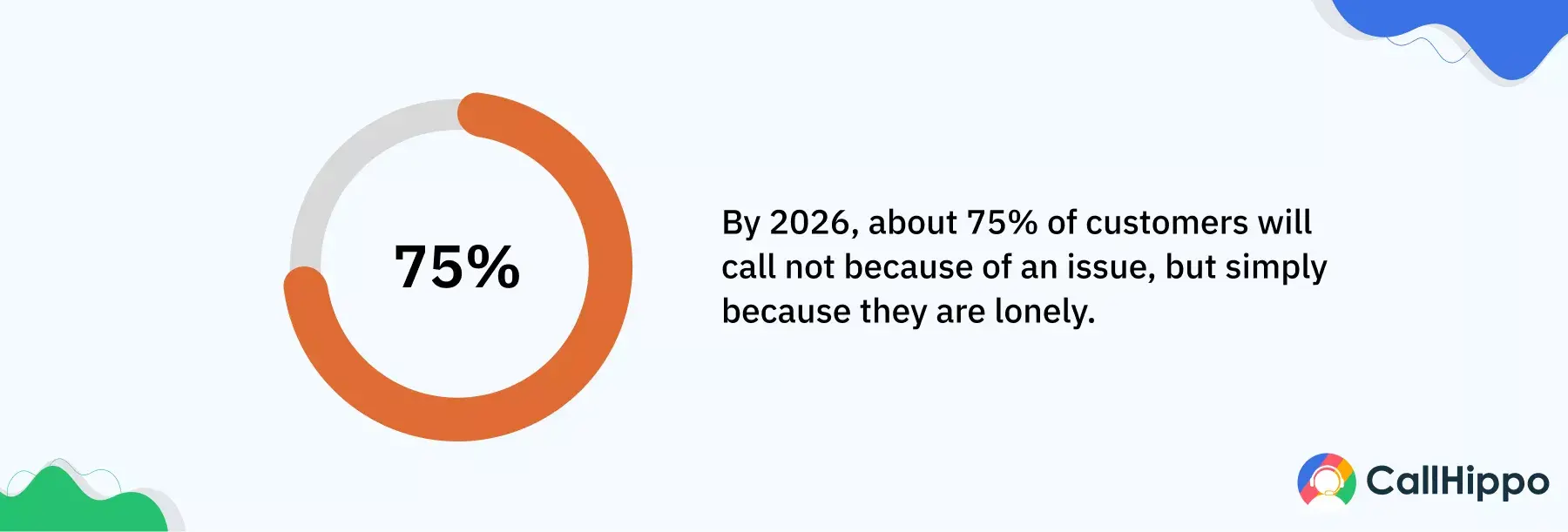
- Nearly 75% of customers say brands fail to excess their service expectations.
- However, 78% will continue doing business after a mistake if the support experience is handled well.
This proves one thing: customers don’t expect perfection. They care more about the effort, clarity, and care.
Negative Impact of Poor Customer Service
When your customer service is not up to the mark, it quietly damages trust and pushes customers away for good. When people feel ignored or passed around, they remember it for longer than the solution itself. And the data proves it:
- 32% of customers stop doing business with a brand after just one bad experience.
- It can take up to 12 positive experiences to repair the damage caused by one negative interaction.
This is a serious loss from a single moment of failure. With a poor customer service experience, customers report feeling unimportant when they get slow responses, repeated handoffs, or robotic replies.
And once that emotion sets in, you are solving two problems instead of one:
- Fixing the original issue
- Winning back lost trust
That second one is always harder.
How Personalization Enhances Customer Service?
At the core, people want to feel seen and valued. A lot of things matter in this because when you remember their name, preferences, or past interactions, it taps into their psychological need for social recognition.
And then there is the reciprocity principle. It says that when someone does something thoughtful for us, we feel compelled to reciprocate. Similarly, when you personalize service, customers often respond with customer loyalty, repeat purchases, and positive word of mouth.
Our 2026 research findings confirm this pattern clearly:
- Nearly 72% of customers prefer support agents who understand their previous interactions.
- Around 63% of US consumers prefer to buy from brands that tailor their experience across touchpoints like support, promotions, products, and messaging.
- 26% of consumers switch brands out of boredom, highlighting the growing need for personalization.
- About 41% of Gen Z and millennials give up when self service solution fails them. Because patience is low and expectations are high.
Taken together, these signals point to one thing. Personalization is how you build trust and reduce frustration. Customers feel understood when support customer service agents remember context and respond with relevance. And when they feel understood, they stay.
How Customers Choose Support Channels Today?
How customers choose support channels is driven more by emotion than convenience. When they are frustrated, they pick up calls. When they want speed, they choose chat or social media. And when they want clarity, they turn to email. Each channel reflects a different customer mindset.
1. Customer Service on Social Media
In our research, 82% of customers said they prefer social media for feedback, support, or complaints.
This tells you something important. Customers choose social media when they want speed and public acknowledgment.
When you raise an issue in a public space, delays are much louder there. If brands respond fast and with empathy, trust builds quickly. On the other hand, slow replies do the exact opposite. Social support is less about solving everything and more about showing that you are present and listening.
2. Customer Service via Email
Around 68% of customers in our study still prefer email when they need help.
Email is where customers slow down. They explain the full context and expect a thoughtful reply. This channel works best for detailed issues, follow-ups, and documentation. Here, clarity matters more than instant speed.
Because email is where you can show understanding and context in a broader manner, and it is more personal. This is when customers feel respected, and they stay patient through longer resolutions.
3. Phone Calls and Voice Support
Our benchmarking data shows that calls should be answered within 28 seconds to prevent frustration from building.
When customer service frustration peaks, they want to hear a human voice. Calls feel direct and reassuring at that moment. That is why traditional phone support still matters so much. When your response is quick and in real-time, you can better control the situation then and there. And phone support is not about speed alone. It is about empathy, reassurance, and solving things in one go.
This is where CallHippo naturally fits in. Features like intelligent call routing and real-time call monitoring ensure urgent calls reach the right agent without delay.

Handle Urgent Calls Without Chaos
Route priority calls instantly and monitor them in real time with CallHippo.
bottom circle
4. SMS and Messaging-Based Support
Our channel analysis found SMS open rates reaching as high as 98.2%, far outperforming any other support channel.
When the stress of a call or the delay of an email comes up, people pick SMS as a fast option. Most customers prefer messaging because it fits naturally into their daily routine and avoids the effort of a phone call. In this mode, customers expect short replies that get straight to the point. When you respond fast and clearly, the conversation feels personal and effortless.
But there is a risk factor you should be careful about. If messages start lagging or feel impersonal, frustration builds much faster.
5. Live Chat Experience
Live chat is a functionality that became increasingly popular during the pandemic.
In our research, 46% of customer service leaders said that live chat helped them maintain service levels when each member was remote, and call volumes spiked.
What makes live chat work is the balance it offers. Customers get quick answers without waiting for calls. At the same time, service agents can handle multiple conversations with better focus. A thing to remember is that a chat needs context and a human touch. When replies feel scripted or delayed, it can cause frustration among customers.
Recommended Read : What is Omnichannel Marketing?
6. Omnichannel Customer Service
Omnichannel support is about memory. Customers expect brands to remember customer history across multiple channels. Repeating the same issue over and over again is something that they avoid while facing a problem. When context follows, trust grows. This approach reduces effort and feels respectful.
CallHippo is one of the top omnichannel communication platforms that 5000+ businesses trust. You get all the communication channels into one place so teams don’t have to switch tools or lose history. Over time, this consistency matters more than speed alone and plays a big role in long-term loyalty.

Stop Making Customers Repeat Themselves
Keep call history, messages, and context in one place with CallHippo.
Take a 10-Day Free Trial No credit card is required!
What Will Define Customer Service in 2026: 6 Shifts Leaders Can’t Ignore
Customer support representative teams are already stretched, and the pressure is not easing up on them. Customers want faster replies, fewer repeats, and more context. And they expect all of this without explaining themselves twice.
Based on CallHippo’s 2026 research across 2,000 professionals, I’ve listed these shifts which leaders need to pay attention to right now. Let’s look at what is quietly reshaping customer service:
1. Customers Will Judge You by Memory, Not Speed
In customer service interactions, I’ve noticed this over a period of time that, though the speed matters, memory matters more than that.
In our 2026 research, nearly 75% of customers said brands still fail to meet service expectations. A common reason is repetition. Customers expect us to remember who they are and what already happened. When they have to repeat the same issue, patience drops fast. The risk here is tools that work in silos.
If context does not carry across teams, it affects the experience even if replies are quick.
Expert Insight
In real support environments, speed without context often increases churn. Customers forgive delays faster than repetition.
2. AI Will Support Agents, Not Replace Them
Contrary to what everyone believes, AI will support the customer service reps. As our data shows that 89% of businesses believe the best service blends automation with human support.
What I see working is AI sitting beside agents, not in front of customers. It helps with routing, summaries, and suggestions. The danger is over-automation because it affects trust when customers feel trapped with bots. AI should reduce effort for humans and not remove empathy from the conversation.
3. Emotional Intelligence Will Outperform Scripts
Customers don’t care too much about phrasing. What they look for is care and ownership. Support teams that are trained to listen and respond naturally perform much better. The only risk is over-standardization. When all replies sound the same, customers stop believing you mean it.
4. Self-Service Must Work, Or It Backfires
59% of customers say they would rather use self-service to fix simple issues. That preference comes with a condition, though. Expectations are high. If self-service fails even once, many customers do not try again. This is more common with the younger users as they leave faster than they complain.
A frequent mistake that companies make is that they ship self-service without testing real scenarios. Help articles and bots must solve real problems and not just reflect tickets.
5. Proactive Support Will Replace Apologies
85% of customers believe proactive service leads to a more positive experience with a brand. Moving ahead, you don’t want to fix issues after the issue has escalated. What works better is reaching customers before they ask. Alerts, status updates, and clear next steps change the tone completely. I have seen trust increase when teams communicate early. The risk here is silence because if the customer discovers an issue before you mention then it would break the confidence.
6. Support Teams Will Be Measured Like Revenue Teams
Customer support is now under the same lens as sales. In CallHippo’s research, 65% of companies said they actively track customer experience impact on revenue.
Leaders track it because churn, retention, and customer lifetime value are tied to every interaction. But here is the nuance: pressure goes both ways. A fast reply looks good on a dashboard, yet it means nothing if the problem stays open. I’ve seen teams chase speed and still lose trust. What actually matters is resolution, confidence, and how the customer feels when the conversation ends.
Recommended Read : What is Customer Experience Marketing
The Rise of Automation & AI in Customer Service
AI is quietly reshaping customer service expectations. Customers now want responses that feel personal, timely, and aware of context. In fact, 83% of service professionals say customers expect a more human touch, even when AI is involved. This is where the shift is happening. The future isn’t replacing people, but, on the contrary, it is AI handling the busywork, while humans focus on empathy, judgment, and trust. But this only works when automation is used thoughtfully and responsibly.
- Personalization is booming because of the AI-driven insights. Salesforce reports that 67% of service teams using AI say it gives them more time to build real customer relationships.
- In many support departments, AI is already handling a big slice of the simplest cases. Data shows that in 2025, about 27% of support cases were fully resolved by AI tools, and that share is projected to rise to 45-50% by 2027.
- Teams that use generative AI report lower agent burnout, with information overload dropping from 79% to 50% once AI is introduced into daily support workflows.
Industry Benchmarks: How Emotion and Urgency Shape Customer Service Expectations?
Expectations of customer service are shaped by urgency, money involved, and emotional stakes. That’s why knowing industry-wise patterns helps teams benchmark correctly and not chase the wrong standards. Let’s have a look at the comparison table on how customers’ expectations are shaped across industries:
| Industry | Top Customer Emotion | Primary Support Trigger | Response Time Expectation | Channel Preference | What Customers Value Most |
|---|---|---|---|---|---|
| Retail & E-Commerce | Impatience | Delivery, returns, payments | Very fast | Live chat, social, email | Speed and ease |
| SaaS & Tech | Confusion | Product usage, bugs | Fast but accurate | Chat, calls, email | Context and guidance |
| Financial Services | Anxiety | Payments, security, errors | Immediate | Phone calls | Trust and clarity |
| Healthcare | Stress | Appointments, billing | Moderate but empathetic | Calls, email | Empathy and reassurance |
| Travel & Hospitality | Urgency | Delays, cancellations | Real-time | Calls, messaging | Proactive updates |
| Telecom & Utilities | Frustration | Outages, billing issues | Fast | Calls | Ownership and resolution |
Research Note:
- These insights come from CallHippo’s research team, drawing from real support conversations across industries and verified industry data.
Improve Your Customer Service with CallHippo
Customer service today breaks down when teams have to switch to too many tools, lose context, or respond too late. CallHippo brings everything back to one place, so support doesn’t feel more chaotic.
Today, 5000+ businesses trust CallHippo to power their customer conversations across calls and automation workflows. That scale brings real-world reliability and not just features on paper.
CallHippo powers thousands of daily customer conversations across industries. That alone removes a huge source of frustration.
Automation helps in the background. Call routing sends issues to the right agent faster. Call logs, recordings, and transcripts keep history intact. Agents don’t ask customers to repeat themselves.
Most importantly, CallHippo gives support teams space to focus on the human part. Listening better. Responding with clarity. And taking ownership until resolution actually happens.
That’s how service stops feeling reactive and starts building trust, conversation by conversation.
FAQs
1. How often should businesses review customer service metrics?
High performing service organizations review their key customer service statistics on a continuous basis rather than waiting for quarterly reports. The frequency depends on your business size and how much are your customer service issues, but here’s what works best:
- Daily monitoring: Track real-time metrics like first response time, resolution time, and customer satisfaction scores to catch immediate problems.
- Weekly deep dives: Analyze trends in customer service interactions, channel performance, and agent productivity to identify patterns.
- Monthly strategic reviews: Examine customer lifetime trends, churn rates, and how your company’s customer service impacts revenue and retention.
- Quarterly benchmarking: Compare your performance against industry standards and assess whether you offer excellent customer service relative to competitors.
Modern customer service teams use dashboards that update automatically, allowing service leaders to spot issues before they escalate. The goal isn’t just measuring, but acting on valuable insights quickly. Regular reviews help you understand customer needs, adjust self service resources, and ensure your team isn’t wasting time on low-value tasks.
2. Are customer service statistics different for B2B and B2C companies?
Yes, significantly. B2B focuses on long-term customer relationships and customer lifetime value, relying heavily on traditional phone support and call centers for complex issues. Customer data is richer, justifying intensive providing customer service efforts.
B2C prioritizes speed. Customers expect instant responses across multiple channels. Self service options and AI tools are essential for assisting customers efficiently. Due to poor customer service, B2C clients switch faster, while unhappy customers share experiences publicly. Understanding these differences helps serve customers effectively.
3. How do response time and resolution time affect customer satisfaction?
Both metrics directly shape customer satisfaction. Fast responses (under 1 hour) create a positive customer service experience, while delays trigger customer service frustration. Resolution time determines if problems actually get solved, high-performing service organizations achieve 85%+ first-contact resolution.
Service agents with complete customer history resolve issues 48% faster. Use AI agents for instant acknowledgment and equip teams with customer data for one-interaction resolutions. Together, these metrics drive customer loyalty and business success.
Published : February 24, 2026

Priya Naha is an experienced technical content writer who focuses on VoIP and telephony technologies. Her expertise in telecommunication and content marketing allows her to simplify complex topics with real-world knowledge, making her writing relatable, informative, and easy-to-read. Her direct involvement with VoIP products and solutions makes her a reliable voice in the field.

Let’s Stay in Touch
Subscribe to our newsletter & never miss our latest news and promotions.
 24k+ people have already subscribed
Source